by Paula D.
on November 20, 2025 1:48 pm in Community
Breadth, strength, presence. Notice the monarchs drifting by, the sea breeze carrying a hint of lavender, and the sound of the leaves rustling. Finally, have your uncovered feet on the earth. Yoga in the Beach 91st Community Garden is happening this weekend, Sunday, Oct 5 at 11:30 a.m. Bring a mat, bring a friend, leave the stress at the gate.
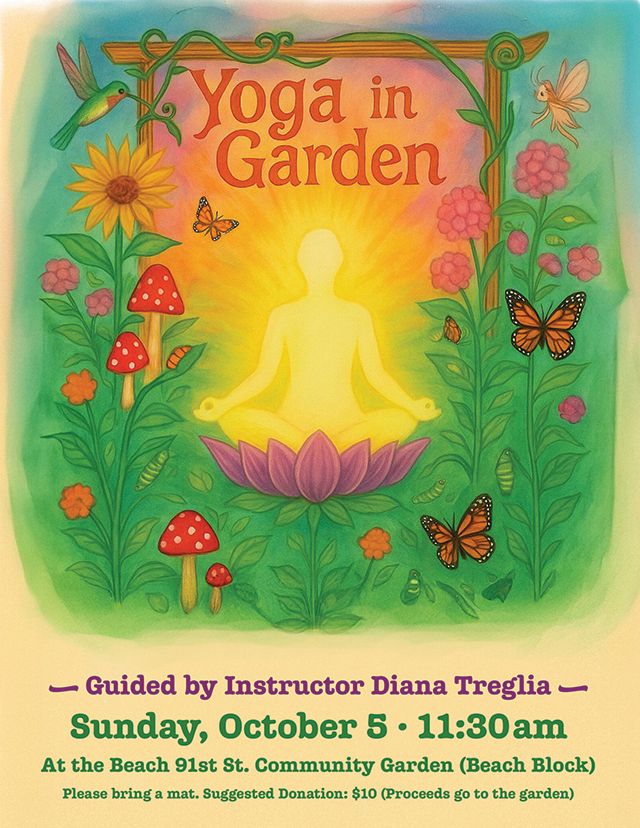
I met our instructor, Diana Treglia, when I was asked to present at the Belle Harbor Garden Club—such a treat. I met so many wonderful experienced gardener ladies who love to dig, plant, and build community. That’s the whole point, right?
Diana Treglia, B.S., M.A., C-IAYT, has been a full-time yoga and meditation teacher since 1975. A Certified Yoga Therapist with a master’s degree in Integrative Health and Healing, Diana has long been at the forefront of sharing yoga practice. Her work is rooted in the belief that the greatest gift we can give ourselves is greater self-awareness. She currently teaches Chair Yoga on Zoom through the Council Senior Center, offers private yoga therapy, and leads weekly mat classes on Zoom. Her contact is Mandara1@aol.com.
Diana moved here in 2001 and loves the community feel on the peninsula. Every day she walks through Riis Park and into Fort Tilden, feeling “so thankful to live in such a beautiful place—the air, the ocean, the open space.” When I asked her about yoga and gardening, she said, “Gardening is like a form of meditation. It brings you into the moment. Yoga does the same—it brings you into the present and heightens your awareness. Nature does that too.”
Through producing garden events, my neighbors have become collaborators, and I’ve connected with Myriam Gold, too — a new member this year and the artist behind the yoga event poster. She is a creative who describes Rockaway as a “crafted paradise” — ocean at the doorstep, library a block away, sunflowers on every corner. She started a garden 10 years ago when her first daughter was born, so she could taste real berries and tomatoes. Now she grows from seed and uses gardening as therapy, play, and teaching for her children.
Myriam attended L’École Supérieure des Beaux-Arts in Casablanca and studied design/fine arts/organic architecture. She handled international rebrands, produced with Jazzablanca, and worked for the 2014 FIFA Club World Cup in Morocco. In NYC, Myriam dove into underground art and worked with Gaetano Pesce. Today she’s experimenting with painting, volunteering, and running creative at NYC Garage Door Service, her family business. See more of her work on Instagram: @mushroma
This event is the garden at its best—a community potting mix: Diana bringing breath, Myriam bringing art, and all of us creating the connection.
by Paula D.
on November 4, 2025 9:17 am in Gardening
Back in May, I wrote in my column, “I’m Growing Peanuts!” – about the peanut plant a squirrel stored in my garden. I was so excited! I’d never grown peanuts before, and I learned they’re actually legumes, not nuts, and they grow underground; there’s no such thing as a peanut tree! Then summer rolled on, and something funny happened: I started noticing peanut plants all over 91st Street. Once I knew the look of the leaves, they were suddenly everywhere. I thought I was going nuts!
Then it registered… There’s a guy who visits the block most mornings and feeds the squirrels peanuts. The shells pile up by our garden gate, so it seems the squirrels have basically planted the whole block.
Last week, I harvested my peanut plant and shook out a clump of pale shells clinging to the roots. Only 6 peanuts! One plant can grow up to 100 peanuts! I guess I need a bit more practice growing. They’re a southern crop and need 160 days to mature. I think my plant needed more sun; I remember my tomato plant towering over it for part of the season.
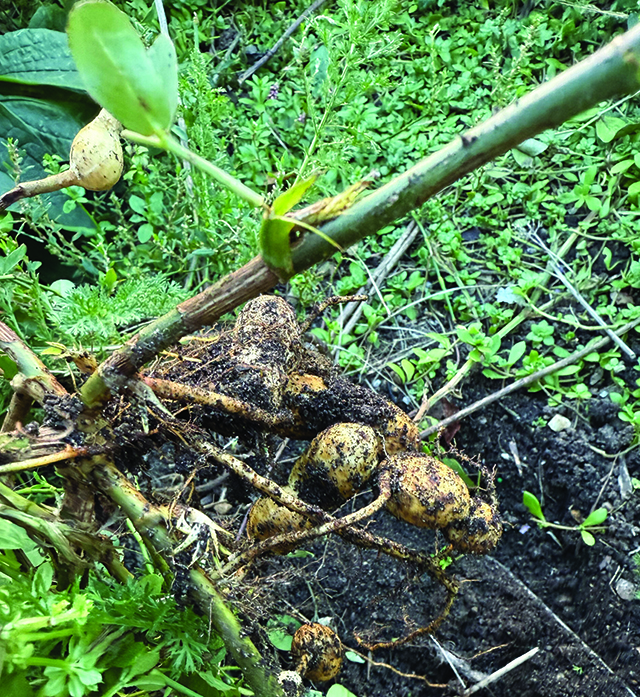
Gently dig around the plant and pull up, shaking off the soil to reveal peanut pods clinging to the roots!
I pulled a few more plants I found in my front garden to add to my peanut pile. I had to try one right away—nothing much was happening! It tasted pretty bland, if wet air is a flavor, that was it. The texture was like a cashew—the kind you get in cheap Chinese food.
After reading a bunch online, I learned what happens next: shake off the soil, leave the pods attached to the roots, and let the whole plant air-dry in a warm, breezy spot for about 1-2 weeks. Then, remove them from the plant and cure for another 1-2 weeks, until the shells are fully dry and give that rattle.
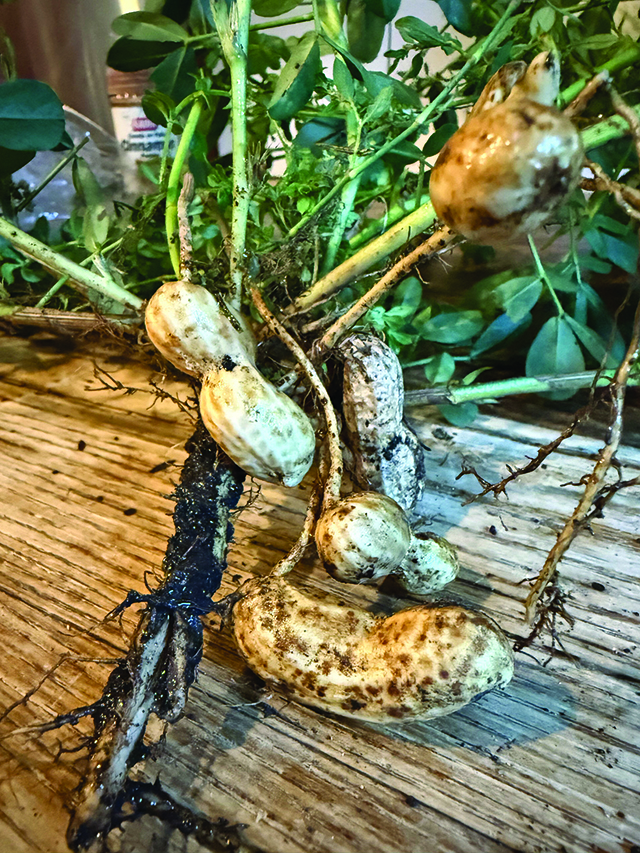
For the first phase of curing, leave the peanuts attached to the plant for two weeks.
I was curious why peanuts need to be cured on the root. According to the National Peanut Board, it’s because the plant draws moisture out slowly through the stems, letting the pods dry evenly so the shells don’t crack—this also helps prevent mold. Keeping them on the roots shields the pods from sun damage, reduces handling damage, and gives the flavor time to develop.
Once cured, you have two options:
- Classic Roast: Shell or leave in shell. 350 degrees for 15-20 min (shelled), or 20–25 min (in shell), stirring once. Cool – the crunch happens as they cool. Season and store: toss with salt/spices while warm. Cool completely and store in an airtight jar for up to a month (or freeze).
- Boil (Southern-style, green fresh peanuts): Simmer in salted water 1–3 hours until tender, then season.
So I’ll have to pause here and finish my peanut journey in a few weeks after curing. Stay tuned.
Why do we let our kids beat up cute-faced avocados and pink unicorn piñatas with a bat? Think about it, it’s really deranged.
This came up as I was preparing for our upcoming community garden event. I want to make a themed piñata (no spoiler alert). Talking with my friends, I said, “Well, it has to have a face—otherwise it will be boring.” After a few minutes of debate, I switched sides. Yeah… this is totally wrong. It basically promotes the subconscious idea that violence toward humans and animals is fun and acceptable. Heavy, I know.
And yet, here we are, joyfully smashing smiling dinosaurs stuffed with Snickers and Skittles at birthday parties across the United States. How did we get here?
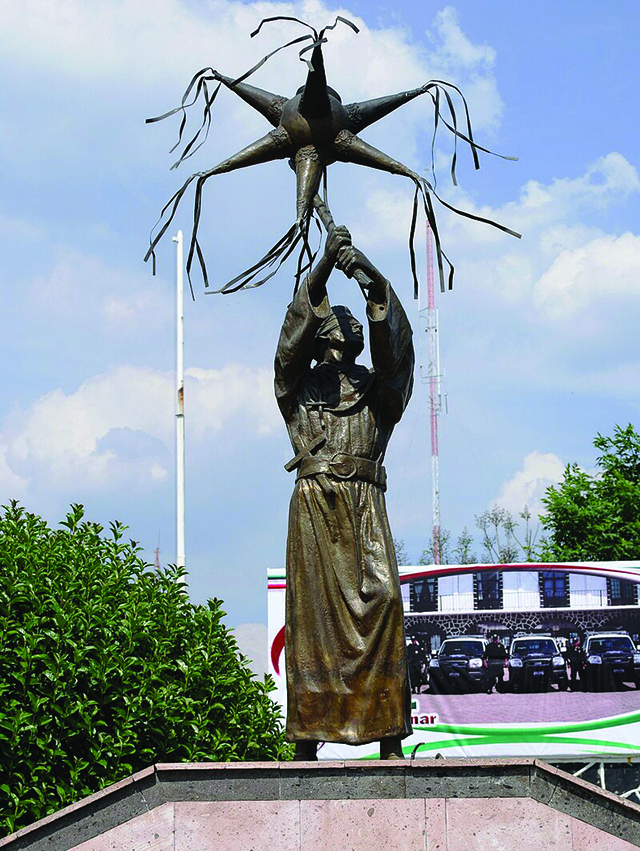
Statue of a Franciscan friar hitting a piñata in Acolman, Mexico State. Source Wikipedia
The history of the piñata is a long evolution through many different cultures. I will try to briefly summarize this fascinating journey:
The piñata originated in China for the Chinese New Year in the 13th century. Figures shaped like cows or oxen were covered in colored paper and decorated. The people would strike them with sticks, spilling seeds, symbolizing abundance. The remains were burned, and people collected the ashes for good luck. So far wholesome.
Marco Polo brought the Chinese piñata tradition to Europe in the 14th century, where it was adopted by Christians and associated with Lent as “Piñata Sunday.” The word comes from the Italian pignatta, meaning “fragile pot.” Early piñatas looked like clay water jars, which some say inspired the pineapple shape. The Latin piña also hints at pineapples or pine cones.
When the piñata custom drops in Spain, the first Sunday of Lent turns into the “Dance of the Piñata.” Later, Spanish missionaries brought it to Mexico, and interestingly, the Aztecs and Mayans already had their own clay-pot traditions tied to gods, offerings, and games. The missionaries just rebranded it with colored paper for religious teachings of god and evil.
And here’s where it gets dark. The decorated clay pot—called a cantaro- was said to symbolize Satan, all dressed up to lure us in. The classic piñata, with its seven spiky points, stood for the seven deadly sins: greed, gluttony, sloth, pride, envy, wrath, and lust. Bright and beautiful on the outside, it tempted us, while the candies and fruit inside symbolized earthly pleasures. Yes, you will never look at a pinata in the same way.
The blindfold stood for faith “fe” which must be blind. Players were spun (sometimes 33 times for Christ’s years) to throw off their sense of space before taking a swing. The act of beating the piñata was denouncing evil. And the reward for rejecting Satan in this way was then the bounty inside.
Today we just beat piñatas for fun! It’s all candy and birthday hats, but one may argue that we’re anthropomorphizing papier-mâché animals, princesses, and cute foods by slapping on a face and then smacking it with a plastic bat until it dies. Hmmm. Next time you’re planning that 7-year-old’s birthday, maybe go with a faceless piñata? Still fun, just a little less nightmare vibe.
Source.
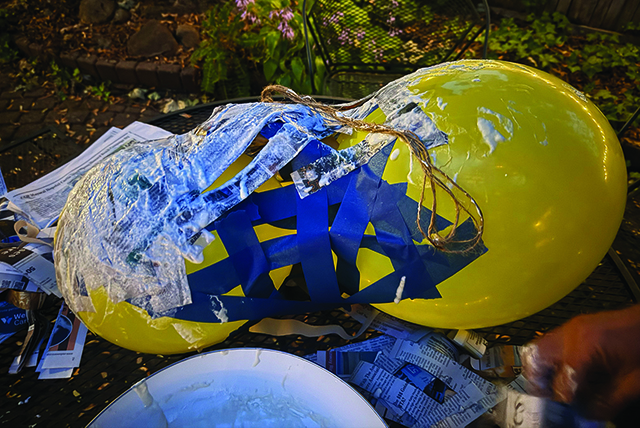
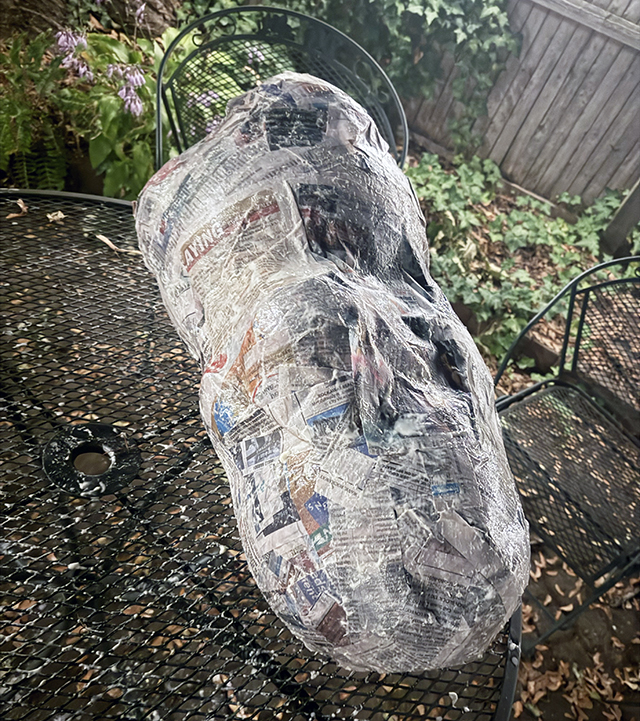
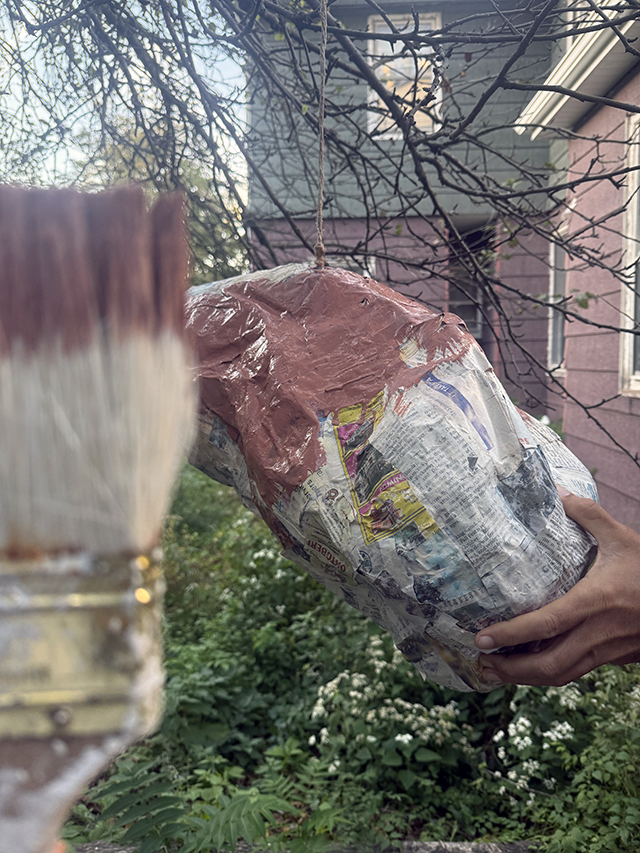
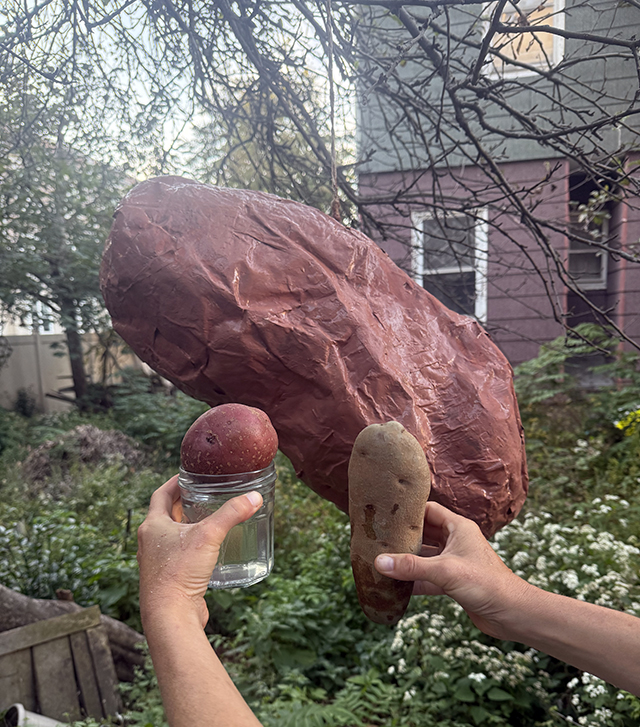
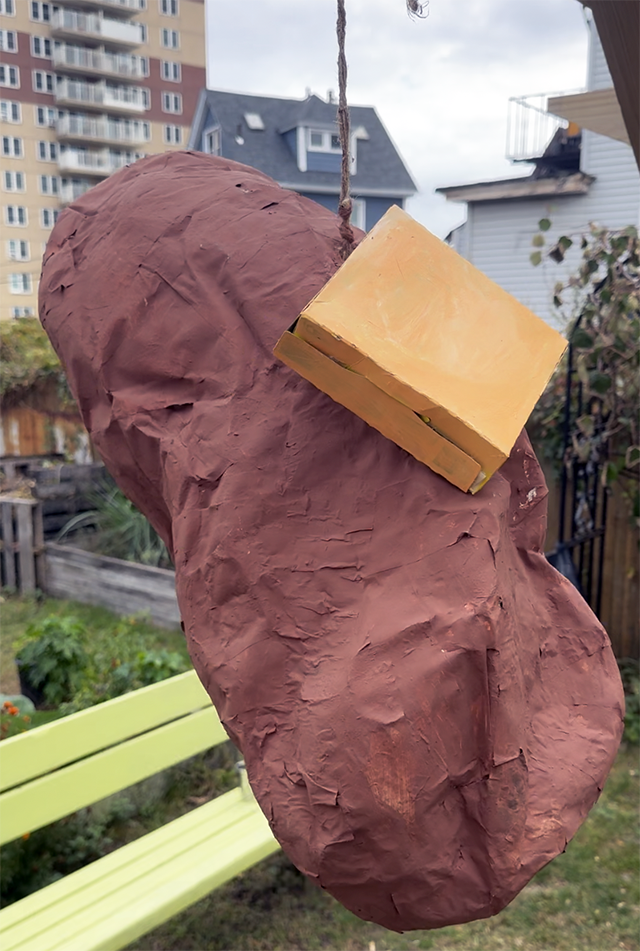
No face!
Potato Fest 2025 is Saturday, Oct. 11, 12–4 pm, at the Beach 91st Street Community Garden. This community event is a joyful celebration of the beloved root vegetable—and a chance to get together with friends and neighbors in the garden to share a meal of (mostly) potatoes. The dishes are home-cooked by community volunteers—thank you to everyone cooking!!
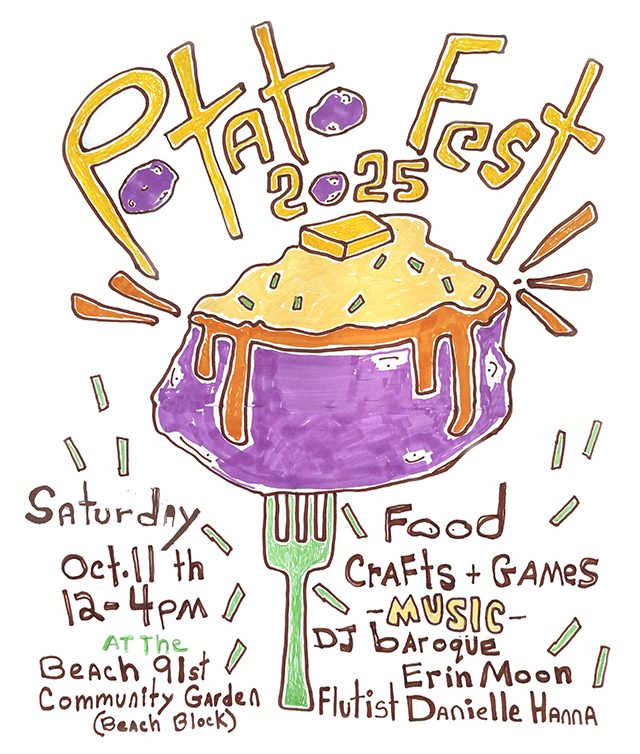
Expect hands-on, potato-inspired fun and activities: a hot potato showdown, a potato art craft, a Mr. and Ms. Potato Head play corner, and an education station to explore the fascinating journey of the potato through history.
The soundtrack is a mash-up— flutist Danielle Hanna (@louise_0405), vocalist Erin Moon (@erinmoonmusic) and Mikal Hameed (@rebaroque) keeping the beats sweet in between. I asked each musician to share about their work:
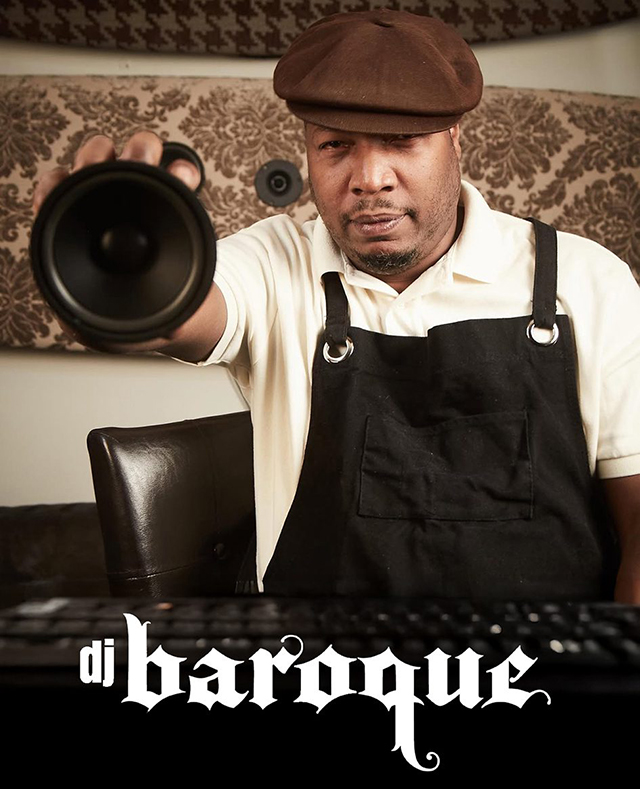
Re Baroque, it makes art you look at and listen to. Mikal Hameed’s large-scale, high-design works fuse visual art, music history, and modern furniture into functional mixed-media sculptures that restore music to a shared, out-loud experience.
Born to musicians, Hameed grew up immersed in sound. His father, Young Jessie, was a jazz/rock/R&B singer-songwriter who recorded the original “Mary Lou,” later covered by Steve Miller Band, Bob Seger, and Frank Zappa. His mother, Barbara Jean Prince, was also a musician; they met gigging. His uncle’s group, Otis Day and the Knights, appeared in the 1978 film Animal House. Preserving the communal joy of music is baked into his DNA.
Raised in South Central Los Angeles, Hameed’s creative path ran from graffiti and punk bands to spoken word, taking him to the Apollo Theater in 1999. He soon moved to Brooklyn and built a production-design career on music videos for clients including Jay-Z, Mike Myers, Moby, Sting, and Liza Minnelli.
In the hip-hop tradition of remix, Hameed reworks cultural hardware—iconic boomboxes, DJ turntables—into new forms with new purpose. His powered speaker sculptures invite audience participation, transforming viewers into listeners and making sound a public, collective event.
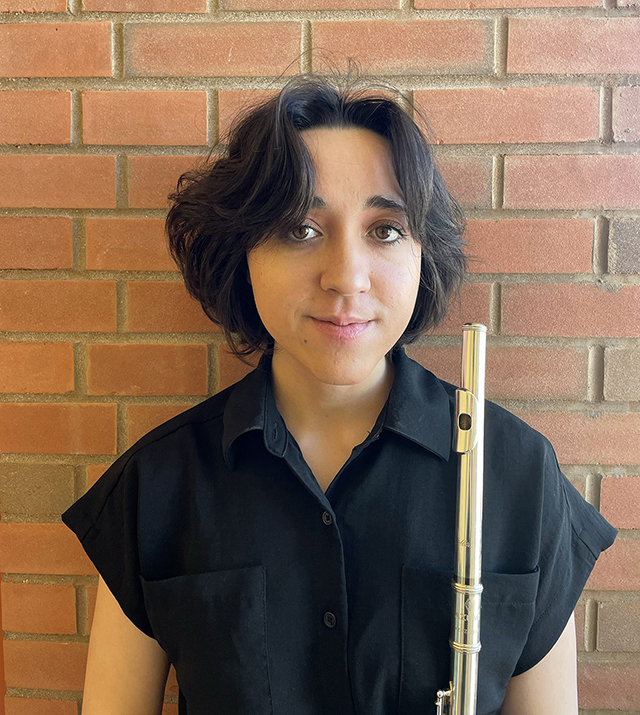
Rockaway native Danielle Hanna is a flutist, saxophonist, and composer based in Queens. She is currently pursuing her B.Mus. in Music Education and Composition at the Conservatory of Music at Brooklyn College, also in the Macaulay Honors program, where she was awarded a full-tuition scholarship. As an undergraduate, Danielle has performed in various Brooklyn College ensembles, such as the Wind Ensemble, Orchestra, and the Brooklyn College Musical Theater Collective. She was involved in the Macaulay Theater Club, where she served as Music Director/Conductor for its fall production of “Bells Are Ringing” (2024), and she is president of the award-winning Macaulay Musicians’ Collective. Recently, her work “Mood Meter” for piano quintet was performed by Conservatory students at the Winter Composers Concert (2025), and her newest piece, “Dust & Moonlight” for flute and piano, was performed at the May Composers Concert (2025).
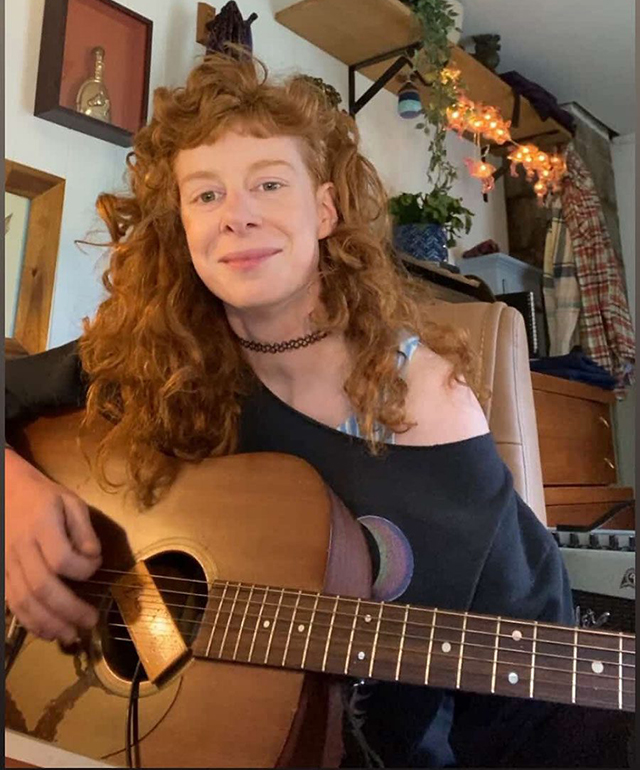
Erin DeBarber (Erin Moon) is a musician, carpenter, community organizer, and mixed media artist based in Franklin, Maine. Her music is rooted in storytelling and transformation, exploring themes of love, depression, resilience, and relocation. Blending indie folk with shades of space rock, Erin’s lo-fi sound is anchored by clever lyrics, raw emotion, and melodies that linger.
Her conversational style invites listeners into her world… as she uses songwriting to make sense of the world and life’s changes and contradictions.
Erin began writing music during the pandemic and embraces the joy of being an adult beginner. In 2022, she left a career in advertising, moved to Maine, and bought a fixer-upper cabin in a coastal town. After studying carpentry, she now works full time as a house painter and builder, keeping her hands busy and her mind free to focus on music.
We have a wonderful day planned for everyone. I hope to see you in the Garden this Saturday! Bring your friends, bring your appetite, and bring your love of potatoes! This is a free event. All are welcome at Potato Fest 2025!