Corn
It’s the year of the corn! At the Beach 91st Street Community Garden’s Spring Plant Sale, back in May, Erin Mulholland, Native Plant Nursery Manager at RISE, stopped by and brought with her organic flint corn seeds. Erin generously shared enough seeds for everyone. Many of our gardeners planted them, including me. And then poof! We have a maize of tall stalks popping up all over the garden.
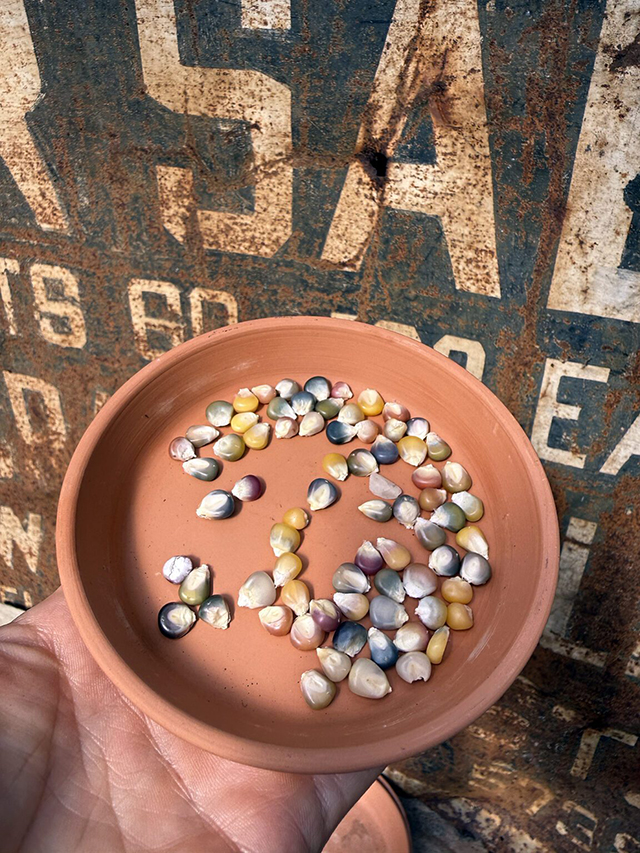
I can’t imagine a more beautiful thing; it’s corn! (flint corn).
Growing corn is a first for me. To be honest, I barely planted my seeds. I poked them into the soil haphazardly and didn’t pay much attention to watering during the first month. Then, they started growing tall enough to notice. It worked!
I started on my corn knowledge quest, and I quickly learned that corn loves full sun, rich soil, and consistent watering because they have shallow roots. Especially water a lot once the stalks start taking off. A layer of mulch will help keep the soil moist.
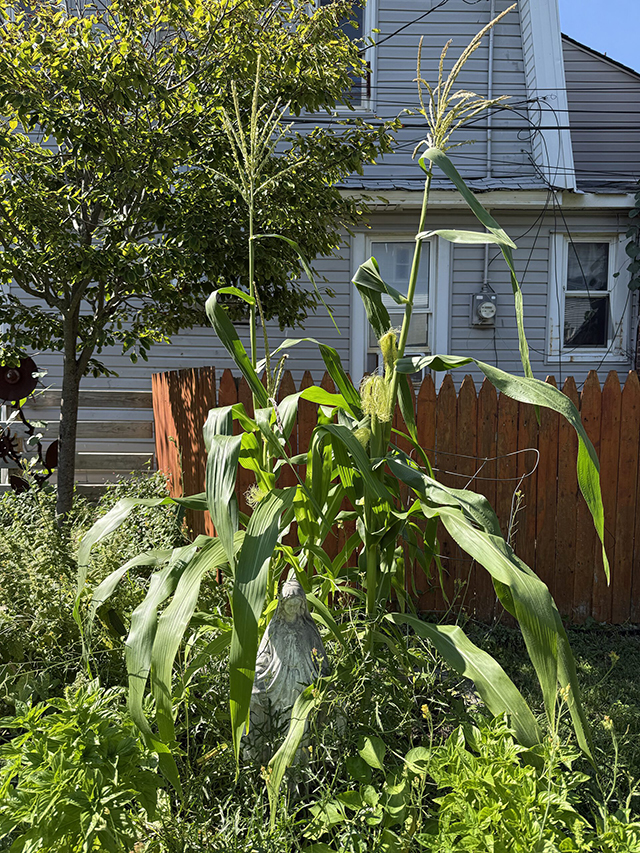
I brought the Blessed Mother into the garden to watch over my very first corn crop.
Directly sow corn seeds, tip down, two inches deep. It only takes about six days to sprout. Corn grows best in a group smushed together, rather than a single row (note for next year).
I had no idea that corn relies on the wind to pollinate itself. Every stalk grows a tassel at the very top, which is the male flower. Those tassels release clouds of yellow pollen that drift through the air. Lower down on the plant, the ears of corn send out long strands called silks. Those you know of and remove when you’re husking. Each silk is connected to a single kernel waiting to form. For every kernel you see on an ear of corn, one tiny grain of pollen has to land on one silk. I still can’t get over this. The more stalks growing together in a tight group, the better chance the wind has of carrying pollen from tassel to silk, giving you full ears instead of ones with missing kernels. The whole process seems so delicate, it’s hard to believe that it works, but nature knows.
I’ve been warned by the internet to keep an eye out for squirrels—they love corn as much as people do. Sweet corn is ready around this time of year, while other varieties won’t be ready until September/October. Until then, I’m keeping a close watch and patiently waiting and watering.
I’ve joked for so many years that I should grow my own corn, because every fall, I buy bundles of dried corn stalks to decorate the front of my house along with mums, gourds, and pumpkins. Every year I look at the price at the garden stores and think, “This is robbery!” But unless you drive upstate, find a farm and tie corn onto your surfrack, you’re at the mercy of the decorative corn price scam. This year, I might actually get the best of both worlds – fresh corn to eat, and then the stalks to use in my fall porch display. Let’s see how it all pans out.
Thank you, Erin and Rockaway RISE for the corn seeds and soon-to-be corn!
Source: https://www.ufseeds.com/corn-seed-to-harvest.html?srsltid=AfmBOopbkMNUG4Ejo_4Tpg-lBXbGVfDlqgLVa9Ulrw8vQfePbZZW6NQw, https://en.wikipedia.org/wiki/Maize