I’ve been to the Rockaway Hotel many times for rooftop cocktails, seasonal markets and for dinner and luncheons. The food is top-notch and the cocktails are 5-star. Whenever I walk in the door, I feel like I’m in Manhattan for the evening, yet I’m only 10 minutes from home!
Last week I signed up for my first experience at the hotel – a wreath-making class hosted by Amy Febinger. Amy is a floral designer living and working in Rockaway. She creates beautiful sculptural arrangements for all occasions including weddings, corporate events, dinner parties, and other community or family events. Amy is known for her modern, romantic aesthetic but her installations are always curated for her clients’ specific needs or celebration.
I walked up the stairs and was greeted by a server offering champagne. The room was set up beautifully with flowers and greens atop large wooden tables. Unexpectedly, Amy began the event by letting all the participants introduce themselves. We were asked to say a little bit about why we were interested in the class and what we were grateful for. It set the tone for an intimate workshop where we felt relaxed and inspired.
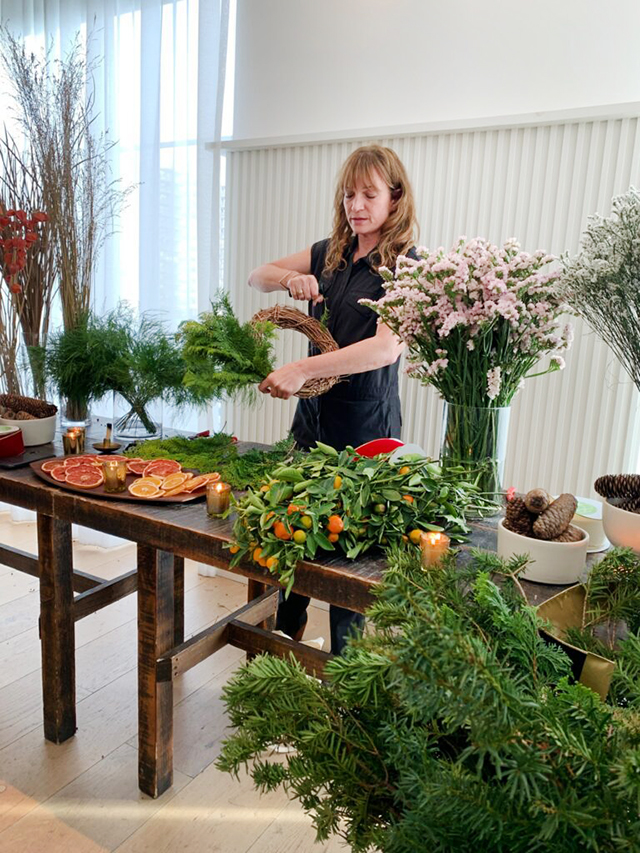
Amy gave us a demonstration, showing us the technique. She spoke about the different flowers and greens we can choose from and how they may work well together, based on color and texture.
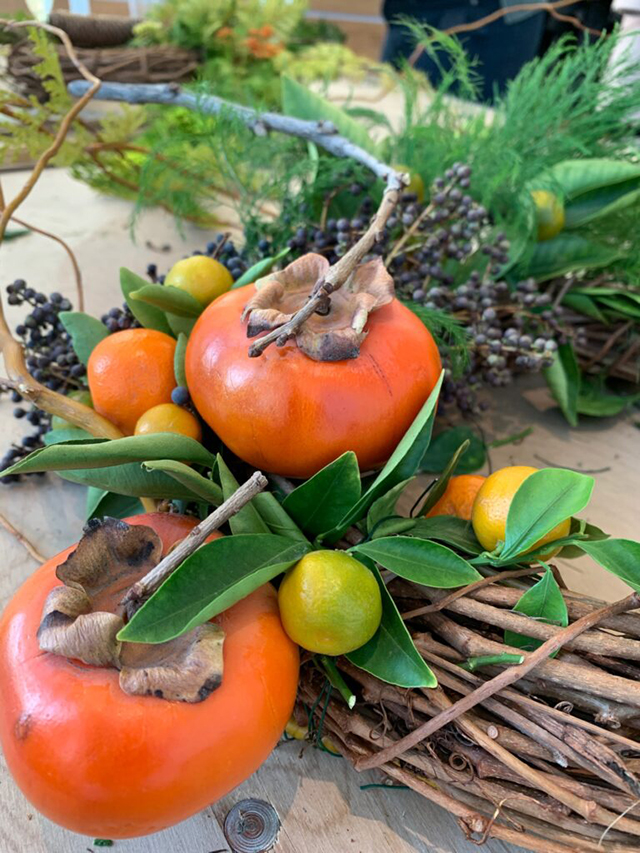
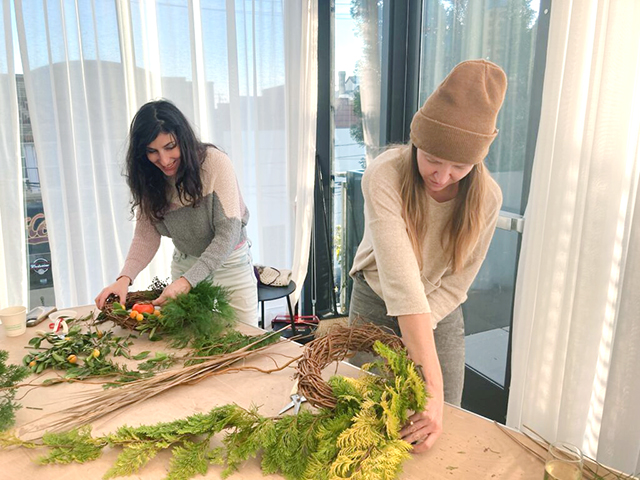
Everyone chose their materials and we got to work. It’s interesting, my vision for the wreath turned out completely different than what I expected. It was a wonderful little surprise. I gravitated towards bright colors and fruits rather than heavier, classic Christmas greens.
Midway through the class, crafters started walking around admiring people’s work and asking for advice or providing feedback. It was interactive and fun to meet new people with like-minded interests. My friend Jacquie, who I signed up with, went big, bold, and organic. She was inspired by some of the creations Amy featured on her IG account. I must say, everyone was commenting on how lovely and unique Jacquie’s wreath was!
I asked Amy if she planned on another wreath-making class. She said a workshop in the spring and mid-summer was very likely.
I had such a wonderful day, the most fun I’ve had in months actually. The holiday season can be difficult or stressful for many. Taking the time to do something for yourself is so important. I’m grateful for people like Amy Febinger who follow their passion and in turn, give that light and enthusiasm back to our community.
Support local businesses this holiday season and visit bourgeonflowers.com for floral arrangement gifts. Follow @bourgeonflowers on Instagram to view Amy’s breathtaking designs. And make sure to check out The Rockaway Hotel’s happenings page (herockawayhotel.com/happenings) to find out about upcoming events!
by Paula D.
on December 9, 2021 9:49 am in DIY
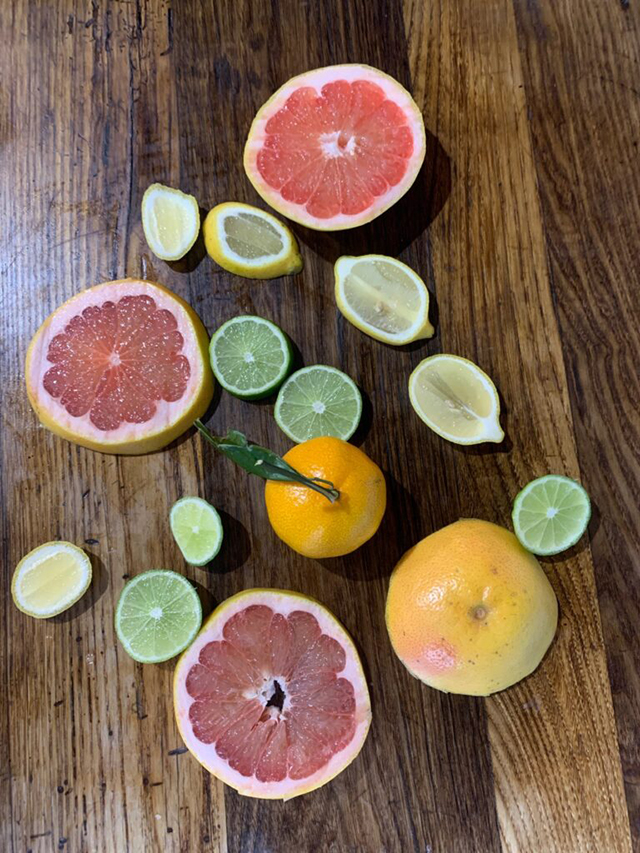
It’s funny how I’ve been thinking about citrus fruits lately and it’s almost winter.
I was preparing my bath of fruits and herbs the other night. While slicing up the lemon, I remembered that my friend Jodi posted a picture of dried fruit Christmas ornaments last year on her instagram account. They looked beautiful. I wanted to try this!
I called Jodi and got some pro tips and creative crafting ideas. Below are the directions for this holiday craft.
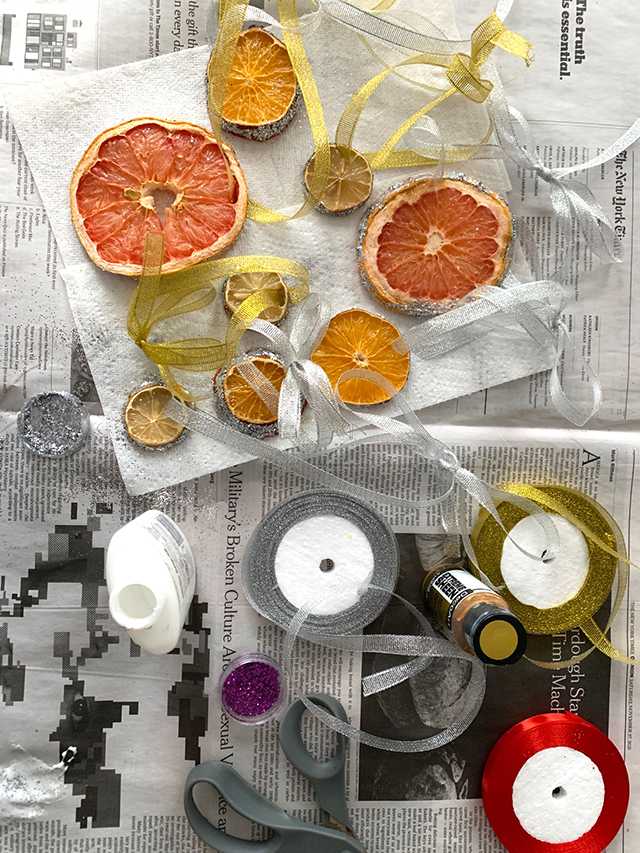
DIY Fruit Ornaments
Supplies:
Knife
Cutting board
Baking sheet
Parchment paper or wax paper
Lemons, oranges, grapefruit or other fruit of your choice
Ribbon and/or wire hooks
Toothpick
Q-tips
Craft Items: sparkles, glue, ribbon, gemstones, etc.
Directions:
Step One: Cut the fruit into ¼ inch slices and carefully remove the seeds with a toothpick. Try to make the cut as even as possible using a sharp knife.
Step Two: Arrange the fruit slices on a baking sheet lined with parchment paper. Place in the warm oven set to about 150-170°F. Bake for 3-4 hours. Flip every hour. You want the fruit to keep its color, so it should not be completely shriveled. Alternatively, if you’re a planner and have the time, you can leave the fruit out for three days to dry naturally. To note, the slices will curl a bit more using this method.
Step Three: Set up your crafting station. Use a toothpick to feed the ribbon through the fruit. Use sparkles or other crafting supplies to adorn the decorations. Or keep the look natural. This is where you can get creative and make them your own – to fit your personal holiday style.
Besides this being a very affordable and fun decorating option, I like the idea of an old-fashioned Christmas. Before we had big box stores with every decoration imaginable, families used what the earth provided to them. The branches and sticks outside their home, the pine cones on the ground, the fruit they grew, and the berries on the trees. This concept is so appealing to me. Additionally, DIY decorating is less wasteful and safer for our environment. And I bet these decorations will look more beautiful than anything you can buy in a store because they’re homemade with love.
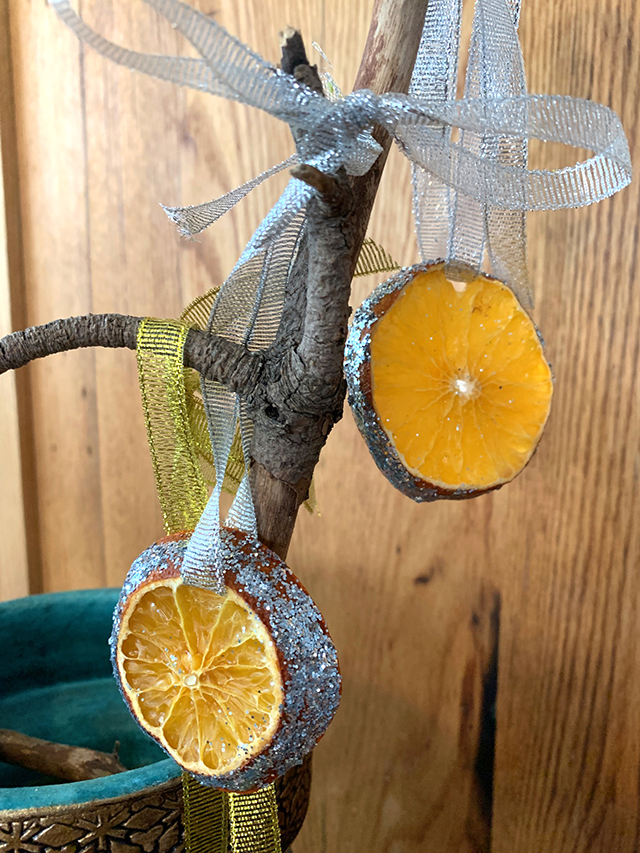
I’m very pleased with how my fruit ornaments turned out. The fruit is transparent and when the light shines from the window or the Christmas lights, it has a warm glow. Apart from using these to adorn your tree, you can also decorate holiday gift packages, string them together as garland or integrate the fruit into a winter floral centerpiece. Turn on the Christmas music and try this craft with your friends or family. And the kids will enjoy it too!
by Paula D.
on November 26, 2021 9:39 am in Recipes
I had the idea to convert our spare guest room, where I work, into a legitimate office. It’s been a long time coming and now I’m finally getting around to doing it. In the room is a bookcase. I was sitting at my desk the other day and swiveled my chair around. I looked at the bookcase and realized I couldn’t remember the last time I pulled a book off the shelf. I notice how many cookbooks I have – 20 maybe more!
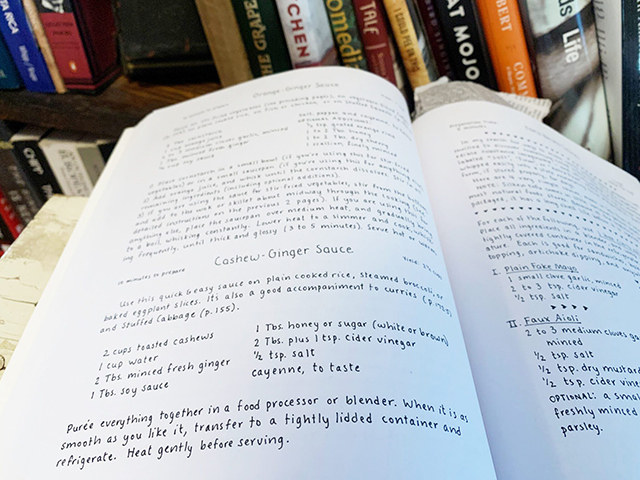
Googling recipes online is our go-to these days. I’ve forgotten all about the enjoyment of flipping through the pages of an old book, looking for recipe inspiration.
I took three cookbooks off the shelf and sat down with coffee. It felt really good. One of them was the Moosewood Cookbook, 40th Anniversary Edition written and illustrated by Mollie Katzen. Someone gave this to me as a Christmas gift. I think it was my sister-in-law Clare. The book is a collection of cuisine from the Moosewood Restaurant in Ithaca, New York, established in 1970. The recipes originate from the homes, families, and creative people who’ve worked in the kitchen there, throughout the years – most not professionally trained chefs. Therefore, the book is a compilation of many ethnic foods. It’s a strong focus on vegetarian meals evolved from the concept of using locally grown vegetables. At the time, this way of thinking was very new to the cultural vocabulary.
The handwritten text and illustrations are beautifully inviting. In the ’70s the group of friends who started the restaurant, jotted down their recipes in a binder filled with loose-leaf paper, to keep stock of their menus. The first edition of the book was photocopies of these notes and Katzen’s Illustrations. 800 copies of the spiral-bound booklet sold out in one week. This was the inception of the cookbook which has not been out of print since the 1st edition.
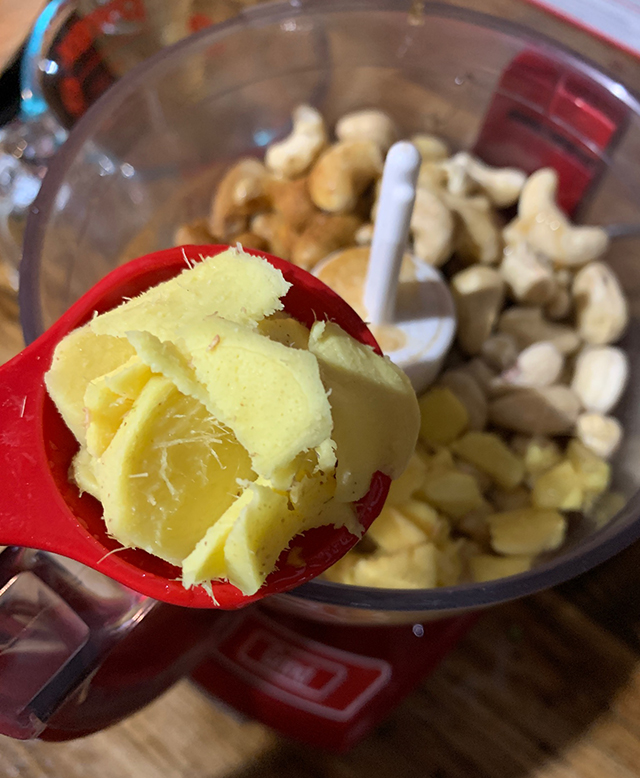
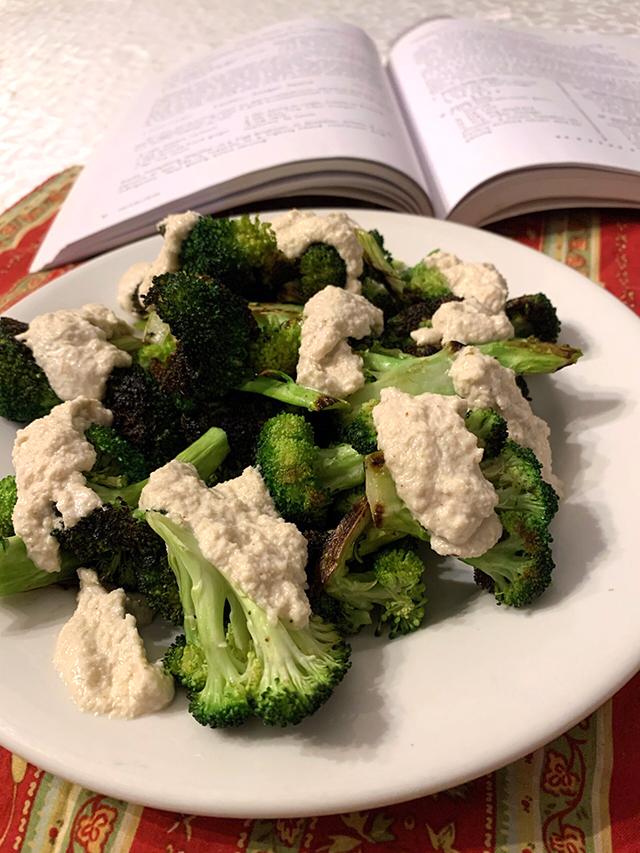
I came across a vegan cashew sauce recipe that looked tasty. Whenever I had great vegan food out at a restaurant, I’ve always wondered how they make foods creamy without butter or milk. Most often – I read in the book – it’s by using cashews. This is the recipe I wanted to try!
Ingredients:
2 cups toasted cashews
Vegetable oil
1 1/4 cup water
2 Tbsp. minced fresh ginger
1 Tbs. soy sauce
1 Tbs. honey
2 Tbsp. pulse 1 Tsp. cider vinegar
Cayenne and salt to taste
Directions: Toast the cashews in the oven at 400 for 20 min. or until golden. Combine all ingredients above in a food processor until smooth.
If you’re looking for a last-minute, unique recipe for all to enjoy this is fast, simple, creamy, and delicious.
by Paula D.
on November 26, 2021 8:47 am in DIY
While I loathe the term “self-care” I’ve been attempting – during this off-season – to hit the reset button. For once, I’m realizing I need to focus on my mental and physical health. I’ve been taking baths almost every night. Sometimes I log off and leave my phone out of reach. This is proving to be a challenge. More times than not, I set up the laptop on the toilet seat cover and watch nature documentaries while floating in the warm bathwater. There was a great YouTube video on ant colonies I recently watched.
This is TMI, so I’ll get back to the point…
In an effort to enhance my bathing experience, I bought essential oils, bubble bath soaps, and eucalyptus-infused sea salt. When I looked at the total in my Amazon cart though, it made me think – the “self-care” trend is a real scam. Companies have successfully developed a commerce trap around our health and well-being. These “self-care” products are expensive and the companies that are marketing them to us are essentially saying, “If you want to care and love yourself first (ugh) buy all of these products and you will feel better.”
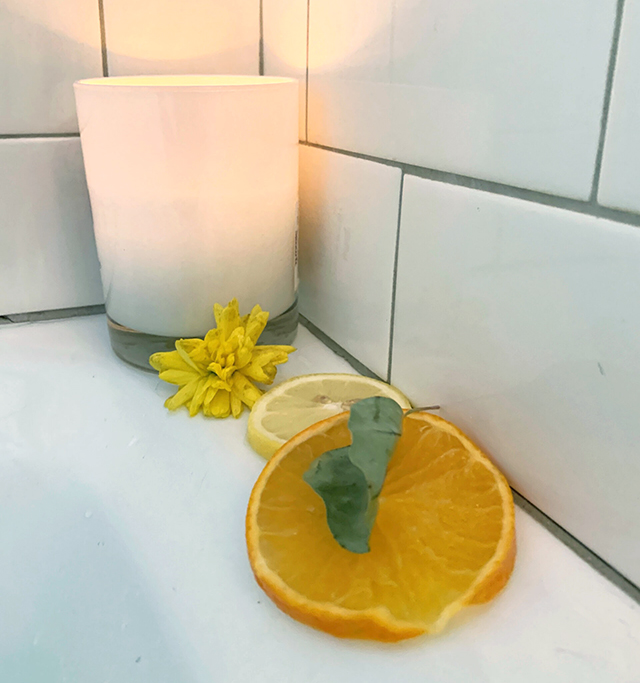
I became irritated again, in the bath the other night pondering the scam. But then, like a bubble in the water, a great idea popped into my head – A DIY bathing experience with fresh herbs, fruits, flowers, and salts. Most of these items I already have around the house. I gave it a try two nights later and it was a beautiful, aromatic success.
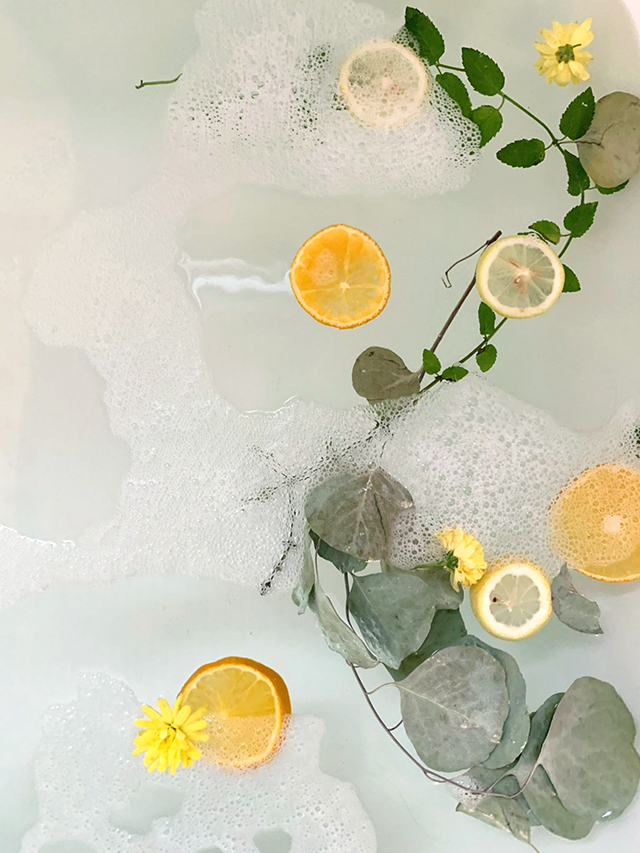
Here are the ingredients for the perfect, low-cost relaxation bath.
Ingredients:
2 parts Epsom salt or kosher salt, 1 part baking soda
1 sliced orange
1 sliced lemon
Fresh or dried flower heads
Fresh Herbs (use your preferred combination):
Lavender
Sage
Basil
Mint or Peppermint
Cinnamon
Cloves
Rosemary
Ginger
Chamomile
Juniper Berries (found everywhere in Rockaway!)
Directions: Fill the bathtub with hot water. Add in your custom ingredients from the above list. Log off. Relax.
Herbs have different medicinal attributes. Choose ones that reflect your needs. Here’s a short guide:
Basil has antibacterial and anti-inflammatory properties that help with a wide range of skin problems including acne. Use basil for a stimulating bath with a “wake up” aroma.
Chamomile has healing properties. Use this for a soothing and calming effect. This herb is great for a nighttime bath and restful sleep. Chamomile also provides relief from insect bites.
Eucalyptus acts as an antiseptic, and decongestant. If you’re feeling unwell, use this herb to clear sinuses. The aroma is refreshing.
Rosemary stimulates blood circulation and is great for oily skin. The scent is piney, perfect for this time of year. Rosemary in baths helps soothe sore muscles and joints.
Sage is rich in antioxidants, Sage cleanses, stimulates circulation, helps with closing pores, and restores skin elasticity.
Lavender is said to be helpful in treating anxiety, sleep problems, and restlessness. The delicate smell is calming.