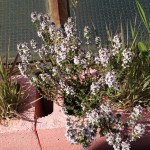
It’s the year of the corn! At the Beach 91st Street Community Garden’s Spring Plant Sale, back in May, Erin Mulholland, Native Plant Nursery Manager at RISE, stopped by and brought with her organic flint corn seeds. Erin generously shared enough seeds for everyone. Many of our gardeners planted them, including me. And then poof! We have a maize of tall stalks popping up all over the garden.
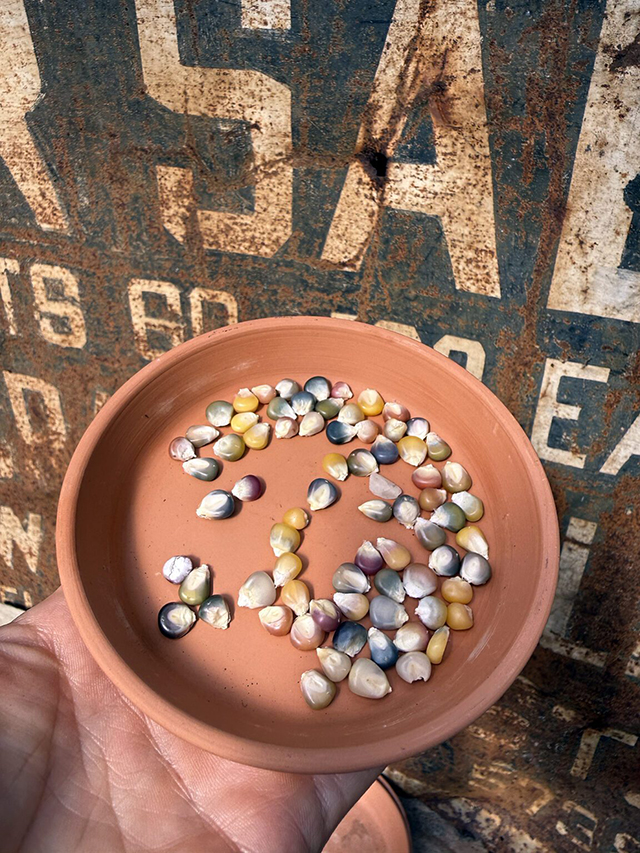
I can’t imagine a more beautiful thing; it’s corn! (flint corn).
Growing corn is a first for me. To be honest, I barely planted my seeds. I poked them into the soil haphazardly and didn’t pay much attention to watering during the first month. Then, they started growing tall enough to notice. It worked!
I started on my corn knowledge quest, and I quickly learned that corn loves full sun, rich soil, and consistent watering because they have shallow roots. Especially water a lot once the stalks start taking off. A layer of mulch will help keep the soil moist.
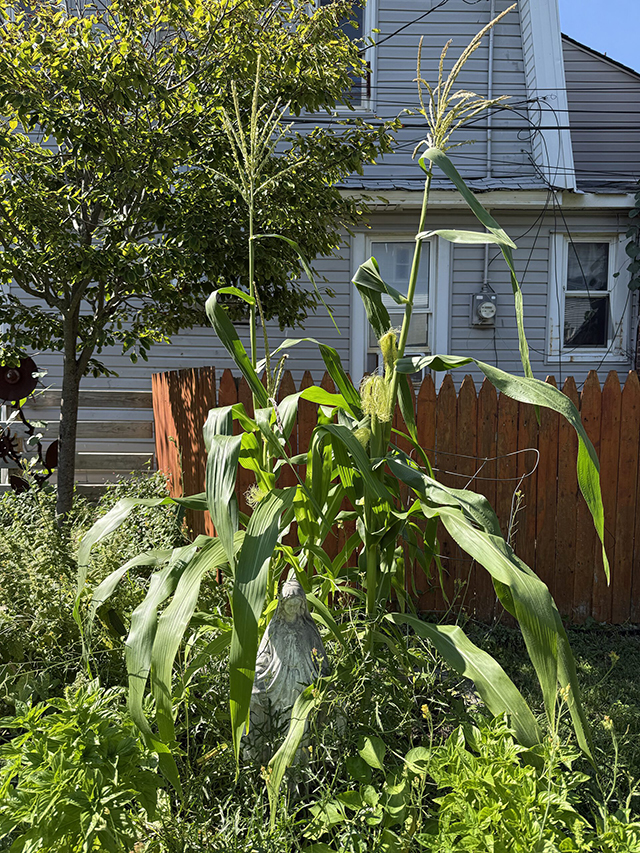
I brought the Blessed Mother into the garden to watch over my very first corn crop.
Directly sow corn seeds, tip down, two inches deep. It only takes about six days to sprout. Corn grows best in a group smushed together, rather than a single row (note for next year).
I had no idea that corn relies on the wind to pollinate itself. Every stalk grows a tassel at the very top, which is the male flower. Those tassels release clouds of yellow pollen that drift through the air. Lower down on the plant, the ears of corn send out long strands called silks. Those you know of and remove when you’re husking. Each silk is connected to a single kernel waiting to form. For every kernel you see on an ear of corn, one tiny grain of pollen has to land on one silk. I still can’t get over this. The more stalks growing together in a tight group, the better chance the wind has of carrying pollen from tassel to silk, giving you full ears instead of ones with missing kernels. The whole process seems so delicate, it’s hard to believe that it works, but nature knows.
I’ve been warned by the internet to keep an eye out for squirrels—they love corn as much as people do. Sweet corn is ready around this time of year, while other varieties won’t be ready until September/October. Until then, I’m keeping a close watch and patiently waiting and watering.
I’ve joked for so many years that I should grow my own corn, because every fall, I buy bundles of dried corn stalks to decorate the front of my house along with mums, gourds, and pumpkins. Every year I look at the price at the garden stores and think, “This is robbery!” But unless you drive upstate, find a farm and tie corn onto your surfrack, you’re at the mercy of the decorative corn price scam. This year, I might actually get the best of both worlds – fresh corn to eat, and then the stalks to use in my fall porch display. Let’s see how it all pans out.
Thank you, Erin and Rockaway RISE for the corn seeds and soon-to-be corn!
Source: https://www.ufseeds.com/corn-seed-to-harvest.html?srsltid=AfmBOopbkMNUG4Ejo_4Tpg-lBXbGVfDlqgLVa9Ulrw8vQfePbZZW6NQw, https://en.wikipedia.org/wiki/Maize
A few weeks ago, while jump roping, I thought, “I can definitely write 500 words about jump roping.”
I had a random idea to keep my jump rope outside in the backyard. The thought being, I’d use it more, having it there instead of its former location – buried in the hall closet. It would be a fun outside exercise thing. I realized that, being summer, putting on sneakers was annoying and became a roadblock to my new jump roping endeavor. So the next incarnation developed. I bought an old yoga mat outside so I can jump barefoot. I inadvertently made a jump rope station! Two weeks later, the setup elevated again when I scored a thick workout mat in the garbage pile at the condo next door.
I added a mini jump rope sesh for a couple of minutes after surfing. Paddling gives my upper body a tremendous workout, so adding a little lower-body movement felt right. It’s also great for coordination and balance training and cardiovascular health.
My jump rope exercise station has transformed into something even better.

Stan’s World Champion Pepper Steppers, Far Rockaway, Queens, NDDL Holiday Classic ’09 Photo Source: Instagram: @stanspeppersteppers
Whenever I finish a long, annoying Zoom call or start feeling wound up by a deadline, or agitated learning Adobe Premiere, I step outside and jump rope for a few minutes. It’s amazing how quickly it changes my mood and resets me. My breathing steadies, my mind clears, and whatever problem seems overwhelming suddenly feels manageable. My heart rate climbs, as the wheel of thoughts in my mind slows.
The other day, while I was jumping, I found myself wondering about the history of the jump rope.
People have been jumping rope for centuries. Historians believe versions of it date back to ancient China, where ropes were used during New Year’s celebrations. In Egypt, people were depicted skipping rope using vines. By the 1600s, children in Europe were skipping rope in the streets, and eventually the pastime made its way to America.
The Double Dutch variation is when two turning ropes are used, and fast footwork along with jumping gets creative. This became especially popular in New York City, where girls transformed sidewalks into social stages with rhythms and progressive dance-style jump roping. What looked like kids playing was actually remarkable coordination and endurance and a fun, healthy activity for city kids.
There is the International Jump Rope Union – the highest authority and world governing body for the sport. And jump ropes today are still in every school as well as in gyms with high-tech functions, digital counters, built-in weights, and all that.
Mine is just a regular plain rope, and that’s cool with me.
As I googled around about the history of the jump rope, I discovered Far Rockaway has its own world-class double Dutch team! Stan’s Pepper Steppers are World Champions who have brought their talent to audiences around the globe. They’ve been featured by Anderson Cooper, PIX11, and other news outlets, and The Wave has covered many of their accomplishments over the years, including their invitation to perform at the legendary Apollo Theater during a competition in 2024. Pretty cool, right?!
There’s something refreshing about an activity that is simple. No complicated instructions. Just a rope, a little open space, and the calming repetitive movement.
If you haven’t jumped rope since middle school, go get one!
Source: https://en.wikipedia.org/wiki/Skipping_rope, https://health.clevelandclinic.org/jump-rope-benefit
by Paula D.
on August 8, 2026 5:35 am in Food / Recipes
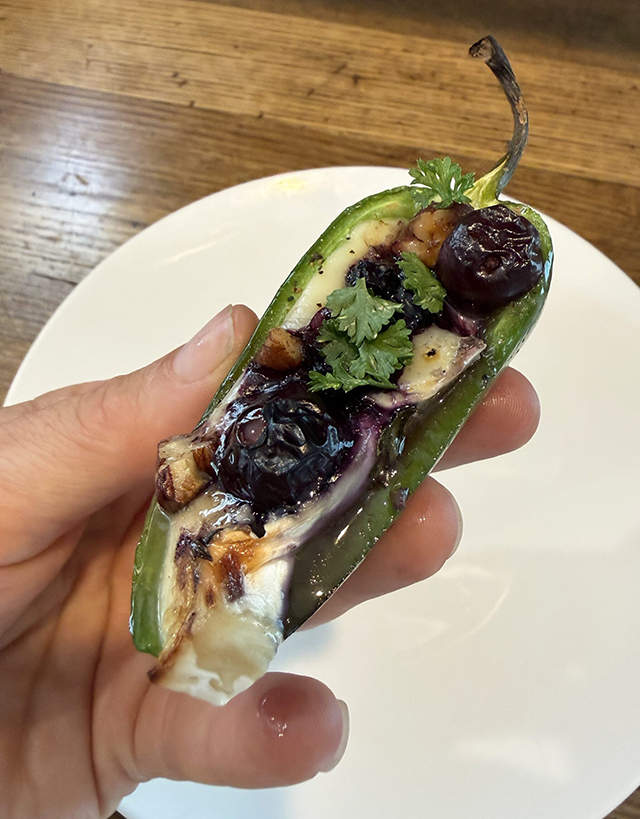
Finger food summer vibes.
The internet served me this fun party recipe, and I served it up to my friends at the Beach 92nd Street block party last weekend.
I know blueberries and jalapeños sound weird, but have faith, tomato readers! The heat of the pepper, creamy brie, sweet berries, crunchy pecans, and fragrant thyme create a delicious, unique balance of flavors. And they are not too hot. Just make sure to remove the seeds and the white pith inside, and the jalapeño heat will be just right.
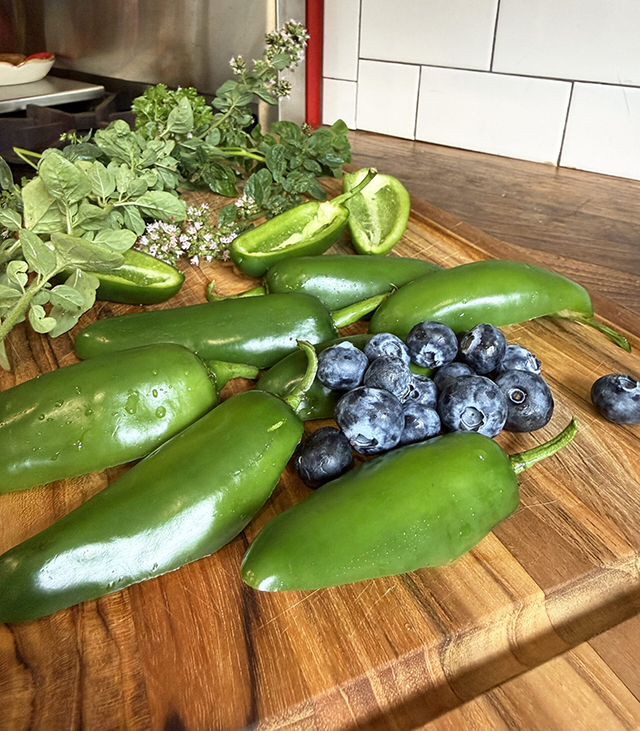
Wild combo, you gotta have faith!
Many of the block party peeps asked for the recipe, so I’m sharing it here in my column. It’s finger food, which is great for these summer parties. Grab, eat, and enjoy!
Blueberry & Brie Jalapeno Party Poppers
Ingredients
- 8 fresh jalapeños
- 6 oz brie cheese, cut into small cubes
- ½ cup fresh blueberries
- 2 tbsp blueberry preserves (optional, for extra sweetness, I recommend)
- 2 tbsp chopped pecans or walnuts
- 1 tsp fresh thyme leaves
- 1 tbsp honey, for drizzling
- 1 tbsp olive oil
- Salt and freshly ground black pepper, to taste
- Fresh parsley for garnish
Instructions
- Preheat your oven to 400°F and line a baking tray with parchment paper.
- Slice the jalapeños in half lengthwise and remove the seeds and pith (leave a few if you like extra heat).
- Arrange the jalapeño halves on the prepared baking tray and lightly brush with olive oil.
- Fill each jalapeño half with a cube of brie cheese and press down
- Top with a few fresh blueberries and a small spoonful of blueberry preserves.
- Sprinkle with the chopped pecans and fresh thyme.
- Season lightly with black pepper.
- Bake for 15 minutes, or until the brie is melted and bubbly and the jalapeños are tender.
- Remove from the oven and drizzle with honey while still warm.
- Garnish with fresh parsley or thyme and serve immediately.
Note: There’s a bit of chopping and slicing involved, so keep your workspace organized and assemble the appetizer assembly-line style. This prep takes about 30 minutes, then pop the poppers in the oven for just 15 minutes. They’re best served hot but are also good room temperature. Make these for your next summer party and let me know how it goes!
Recipe from Instagram:instagram.com/reels/DaSqo7NMGK3/
With all the rain this past week, I’ve been noticing little patches of amber, bright green, and silver blue spreading across tree branches, old fences, cement, and forgotten rocks. At first glance, they don’t look like much, just a bit of moss. But they’re not moss at all. They’re lichens, and the more I learned about them, the more amazed I was.
Lichen isn’t a single plant. It isn’t a plant at all. It’s a remarkably complex partnership between a fungus and algae, sometimes with the help of tiny photosynthetic bacteria (cyanobacteria), and can even host other organisms like yeast. They’re considered a composite life form. The fungus provides a safe home, collecting water and shielding its partner from the elements. In return, the algae use sunlight to make food through photosynthesis, feeding them both. Alone, they might struggle, but together they become something entirely new and strong. Scientists consider lichen one of nature’s most successful examples of symbiosis. They grow from high mountain peaks to sea-level coastlines, on every continent — even frigid Antarctica. They are everywhere on our strange and beautiful planet.
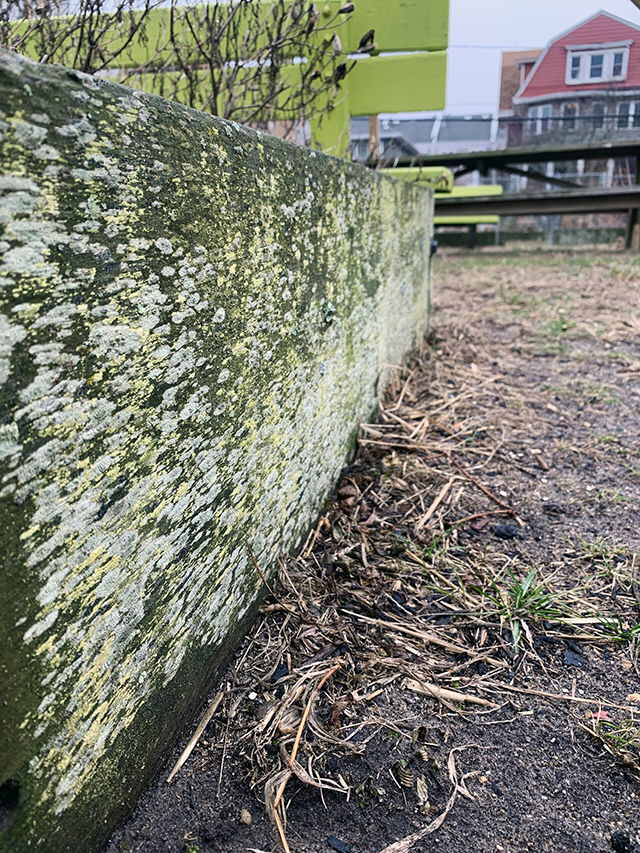
Rain or moisture in the air transforms lichen. Its outer layer becomes translucent, uncovering the bright green algae living inside. Then, as it dries, it hides and you barely notice it is there. This is a picture of foliage I took at the Beach 91st Street Community Garden.
Pay attention to the little things, and you’ll realize lichen is everywhere. It quietly decorates tree bark, paints the cement retaining wall in front of my home, and covers rocks, fences, and branches. I stopped counting the patches I saw on my walk from the beach to the Boulevard.
Get up close, and you’ll discover dramatic little worlds. Their intricate forms remind me of miniature coral reefs growing on land instead of beneath the sea. Or I see tiny gnome worlds, with endless shapes and colors blending together like an organic abstract painting. Some even look like summer snowflakes clinging to the bark of a tree.
Lichens thrive in places where almost nothing else can survive. Some species grow incredibly slowly, just a millimeter or two each year—yet they can live for decades, even centuries. They are survivors. They’re patient, a quality I strive for.
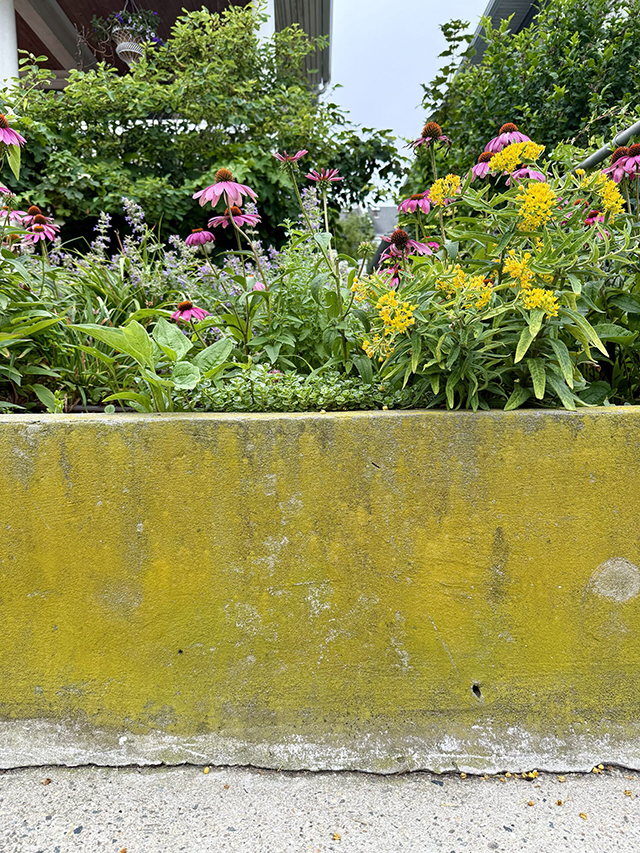
Lichen growing on my garden wall is Acarospora Socialis (bright cobblestone lichen).
The recent rainy weather has made them especially beautiful. Look around on your walks to the grocery store or to the concessions. The moisture wakes them up! Their colors deepen and textures soften. What looked dry, brittle, “God knows what” last week during the heat wave is now a bright, adorning textural showcase of symbiotic life.
There are about 20,000 known species of lichen in an incredible variety of forms and colors. The three most common types are foliose (leaf-like), crustose (crust-like), and fruticose (finger-like or shrubby). We often celebrate the biggest blooms and tallest trees, but lichen asks us to look closer. To notice the beauty in cooperation instead of competition. And to appreciate that communal partnership makes life brighter.
Follow me, discovering the little beauties of the garden on Instagram: @theglorifiedttomato.com