Shade Gardens and a Big Nose
For a long while, I’ve been annoyed that my backyard is shaded. The condo on 91st and Shorefront blocks almost all the sun. So much space to garden back there, but what can I really do with almost all shade?
Around 9 or 10 years old, when you begin to realize that. How your body looks in the world matters (unfortunately). I noticed the size of my nose. It was so big. And I was so small and pale, and I had freckles, of course, only on my nose. The whole situation was alarming to me. I was upset about my nose, and I remember my father telling me once, with a smile, “Don’t worry, Paula, your face will grow into your nose. God knows what he is doing.”
He didn’t deny that my nose was huge for my head, and what he was telling me, in his wonderful way, was — you have to work with what the universe gives you, and have trust. And I will add, be grateful for what you are given, small or big.
My father was right, my face did grow into my nose! It’s still big, but it works. It’s me.
I’ve also grown as a gardener. I learned over the years what plants work in shade, and only recently have I embraced the joy of being in a leafy-covered space. The ease of not squinting, and the sound of leaves in the ocean breeze all around me. It’s a peaceful feeling. A shady garden is a beautiful environment filled with life. Many birds. There is moss and lichen. Snails show their spiral outfits early in the morning as they glide by dew drops. There is texture and leafy color, and the scent of the earth with a pinch of salt in my backyard forest.
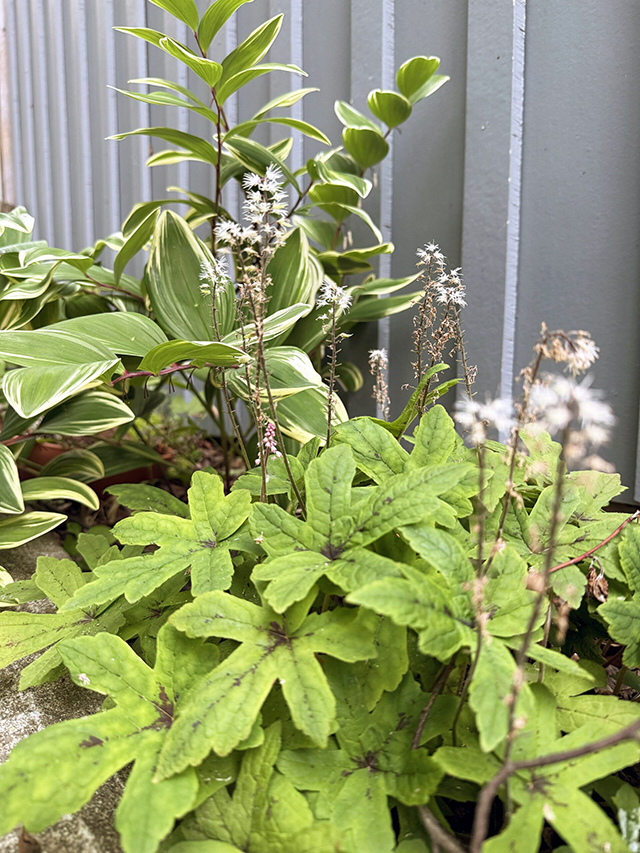
A shady garden gets fewer than four hours of direct sunlight each day.
Instead of sulking over what I don’t have, I’ve stepped up to the shade challenge. I’m working with what God has given me. If everything were easy, life would be boring. You wouldn’t feel the happiness and reward of achieving challenging goals.
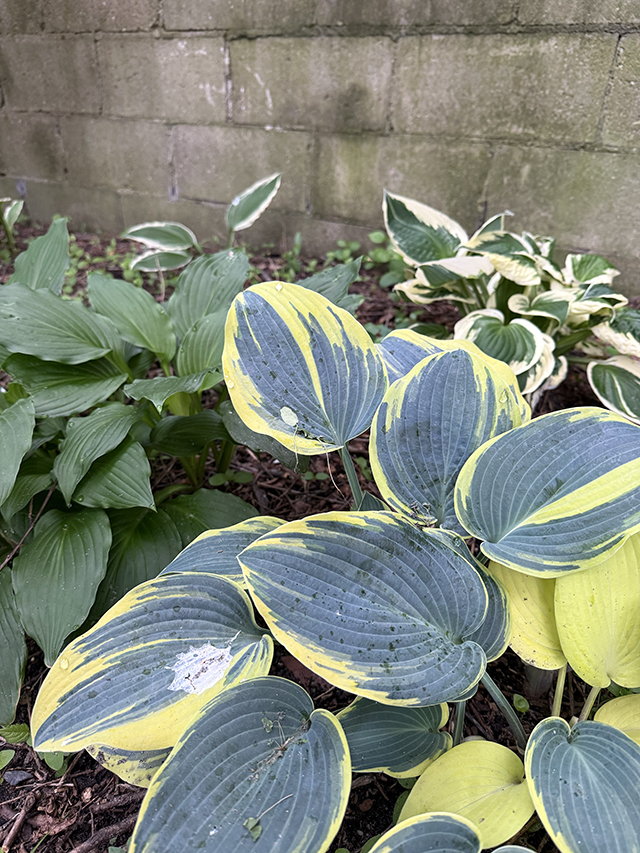
I began with the basic plants I knew could live in the shade — Hostas and Ferns. This is something I learned from my father’s garden at my childhood home. When I moved into my Rockaway house over 10 years ago, hostas were already in the ground. I replanted them, divided them, and let them spread.
I tried ferns too, but they didn’t do so well. They needed more watering than my time allowed, so those faded out.
A community garden member introduced me to Solomon’s Seal — a beautiful, strange tuber with variegated leaves and dangling bell-like white baby flowers. I was offered some, and those started to spread. Suddenly, I had two plants that were really working.
I bought a few more unusual and interesting varieties of hostas to add to the collection. Blue Hostas and First Frost Hosta are favorites now. Aqua blue leaves and those little, light purple flowers I remember from childhood, they shoot up in late June through August.
A few years ago, I discovered Coral Bells. This perennial is easy, colorful and shade-loving, native to North America. I love them for their bright foliage — deep purples, lime greens, oranges, and even almost black tones. They have tiny dusty flowers that pop up in June.
All of the above-mentioned do well in shade or partial shade in many soil types with good drainage. Half of mine are rooted in a mix of sand with a couple of bags of compost I plop on top each spring. All are perennial and can be divided each year to propagate.
This season, I’m exploring more shade flowering plants. On my list: Bleeding Heart, Woodland phlox, and Astilbes – bloom late spring to early summer. False Spirea and Yellow Corydalis (blooms mid-summer), Black Cohosh, White Turtlehead, and Closed Gentian show their flare in late summer.
If you have been given a shade garden, work with it. Our garden spaces and our noses, small or big, are a blessing!
Follow me hands-in-the-soil summer on Instagram – @theglorifiedtomato.