by Paula D.
on November 11, 2021 12:25 pm in Food
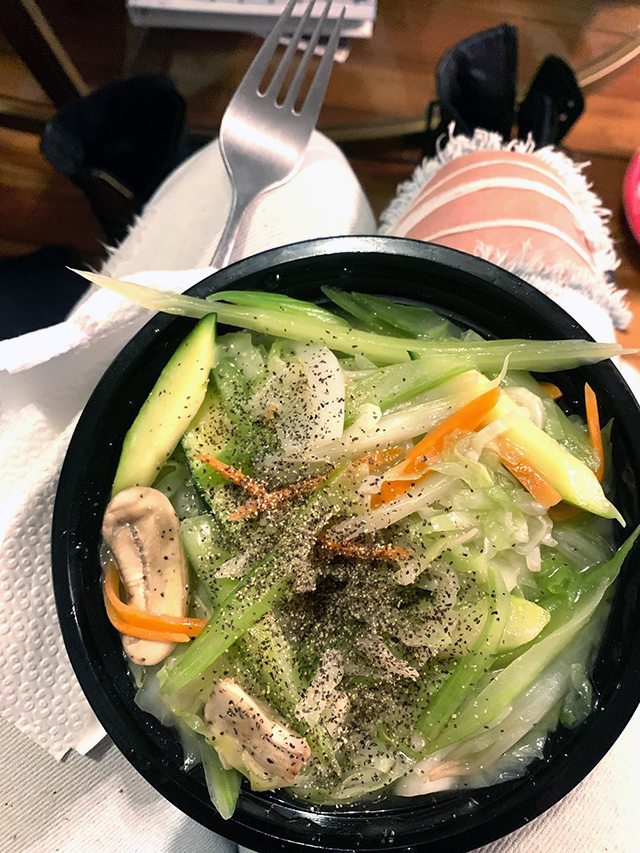
I tried to order Xing Xing the other night. It’s my go-to Chinese place on the peninsula but apparently they’re closed on Mondays. So, I ordered from another place. I’m not going to disclose which restaurant because the food was dreadful. In an effort to salvage my dinner, I added salt and pepper to my veggie chow mein. The pepper cap was loose and I doused it by mistake. It wasn’t looking good, but the fridge was empty so I took a few bites. To my surprise, the egregious amount of pepper did the trick.
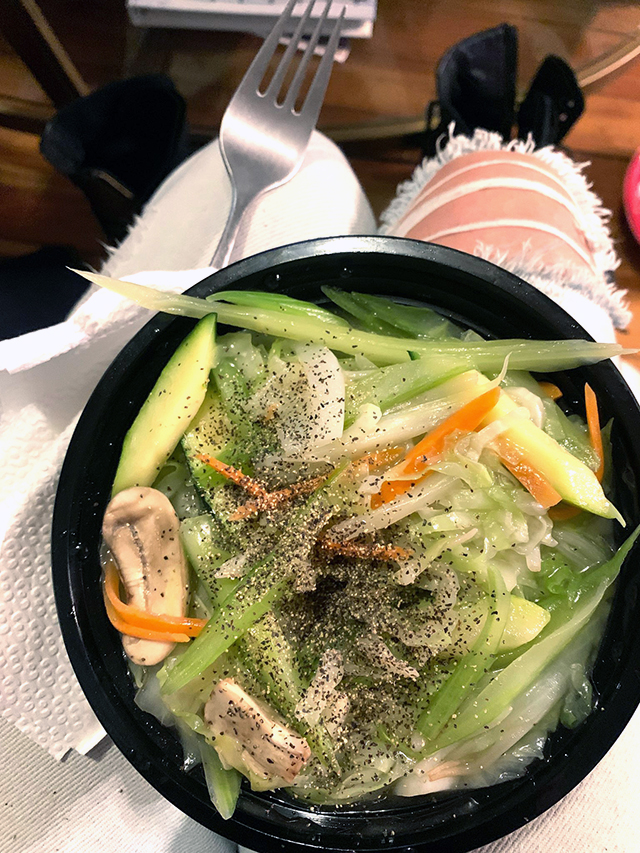
This made me think … pepper is so unrated. Because using “salt and pepper” is habitual, we overlook it’s potential. I also feel we’re not using enough pepper. My suggestion, use more, not less. Lots of pepper gives a nice rich punch. Another pepper tip – which admittedly I don’t always follow – is to use fresh ground pepper. The difference is enormous.
These days, it’s trendy to cook with cumin, curry, sumac, cayenne and other exotic flavorings and that’s all good, but let’s not forget the basics.
Black pepper (piper nigrum) is so common but how much do we really know about the plant? It’s a woody, climbing perennial vine that flowers. It needs to be trellised. Pepper will spread on its own when trailing vines touch the soil. It can also be propagated from cuttings. The plant prefers average soil moisture, humidity and full sun. It’s a warm weather crop thriving in 70-90 degree temperatures. Black pepper can be grown here in New York but as a perennial, it would need a greenhouse environment during the cold winter months. Growing this would be a fun challenge. I may give it a try in the spring, planting it in a large container so I can adjust its conditions in the fall/winter.
Peppercorn is a small stone fruit. The berry is harvested and most often sundried for use as the spice we know and see in the supermarket. White, green, black and red are all from the same plant. The difference being they’re harvest times, which changes the pungency and favor. Red is most expensive to buy, as it needs to stay on the vine the longest. Interestingly, I learned pink peppercorn is from a different plant altogether – baies rose.
Black pepper originates from India and has been used as a spice and medicinally since ancient civilization. It is the most widely traded spice in the world today. Black pepper is mainly produced in India, Vietnam, Brazil and Indonesia. Surprisingly, the United States is the largest consumer of pepper, using 18% of the 20% of its world trade. Maybe we’re using more pepper than we think?
Follow me for the day-to-day in the kitchen on instagram – @theglorifiedtomato.
by Paula D.
on November 11, 2021 11:54 am in Food
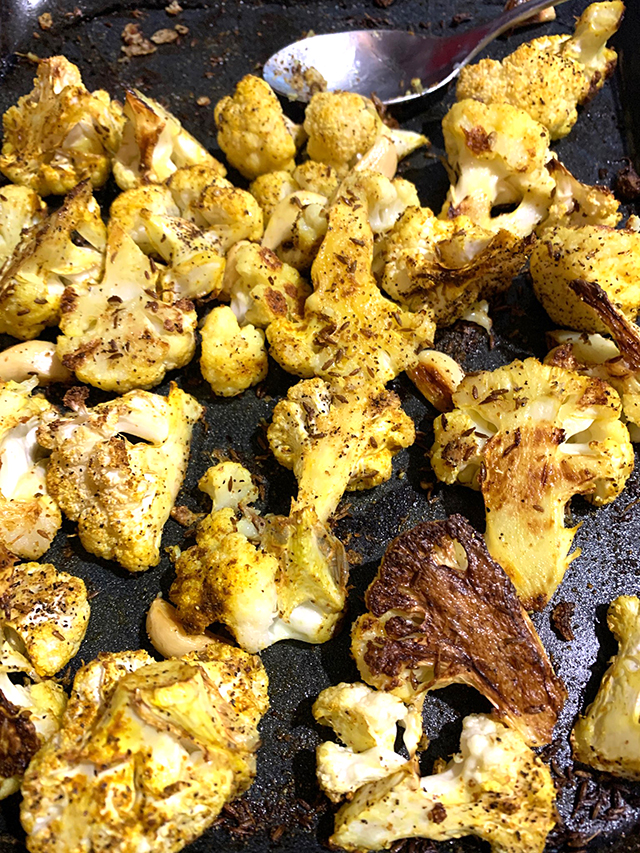
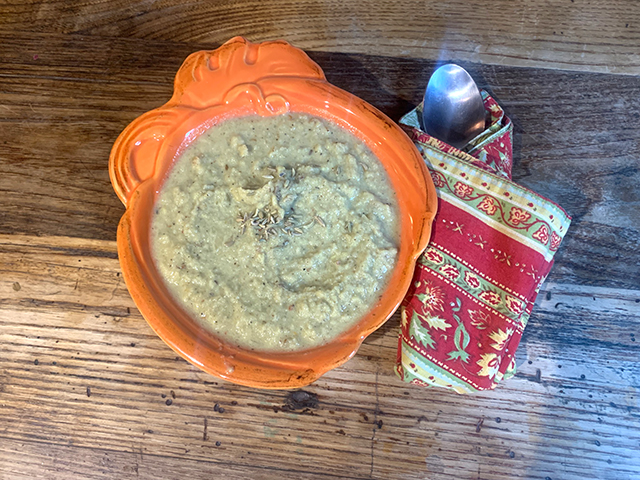
Fall brings soup to our table. Each week during this season and through the winter, I experiment with different types of soup. Making a large batch for the week goes a long way, especially if you have a busy work week. And worst case, you freeze it for another time. I’m essentially vegetarian these days, so soup packed with vegetables is a fast n’ easy delicious meal for me. One pot means less mess too.
And so, this marks my first soup of the season. I wanted a recipe with “heat” to warm me up. I was also looking for something healthy and low fat. I did a little online search and found a charred cauliflower recipe from foodandwine.com. It looked like a great starting point. As per usual, I ended up adapting it. I’m of the mind “make it your own.” Following recipes note for note is boring for me!
Normally when food has a lack of flavor you think… “Well, that’s not good”. But I see bland foods like cauliflower as a blank canvas. They can be flavored in so many ways which makes this vegetable and others like it versatile.
If you like Indian food, you want to give this spicy soup recipe a try. I was very pleased with the outcome. The flavor is rich with warm tastes of cumin and curry. The cauliflower acts as a thick base, which along with the coconut milk, makes for a satisfying and hearty soup. Yet it’s a deceivingly healthy meal. Blending is key for the cream texture. I suggest not skipping that step. Cheers to soup season!
Ingredients:
1 medium head of cauliflower cut into florets
1 tablespoon cumin seeds
1 tablespoon curry powder (or more to taste)
1 tablespoon cumin powder (or more to taste)
1 tablespoon hot pepper flakes
1/4 cup sunflower or grapeseed oil
Kosher salt and freshly ground pepper to taste
1 medium onion, diced (1 cup)
3 tablespoons unsalted butter
1 bay leaf
2 cups water
13.5 oz can of coconut milk
Directions:
Step 1: Preheat the oven to 375. On a large baking sheet, toss the cauliflower with the cumin seeds, curry powder and about 3 tablespoons of oil. Season with salt and pepper and roast for 25 minutes, turning once until the cauliflower is crispy and golden. Set the tray aside, do not wash.
Step 2: In a medium pot, heat the remaining oil. Add the diced onion and cook over a medium heat, stirring occasionally until translucent – about 5 minutes. Add the roasted cauliflower, butter, bay leaf. Pour some water into the baking pan to get the seasoning loose from the tray. Add the seasoned water into the pot. Add the remainder of water. Bring to a simmer. Cook over moderate heat until the liquid is reduced and the cauliflower is soft – about 15 minutes. Take out the bay leaf and discard.
Step 3: In a blender or food processor, puree the soup in batches until smooth. Return the soup to the pot and stir in the coconut milk. Rewarm over a medium heat. Add more water for a thinner consistency if desired. Season the soup with more curry, cummin, salt and pepper. Add in the hot pepper for heat! Serve hot.
Follow Paula for the day-to-day on IG @theglorifiedtomato
by Paula D.
on November 2, 2021 11:57 am in Holiday
The most iconic image for this time of year is the glowing jack o’lantern. But where did this tradition come from? Carving pumpkins came to America by way of Irish immigrants. Perhaps this is common knowledge for all the Irish folks here in Rockaway but it was news to me.
My friend sent me an article from history.com that I found so interesting. It’s about the origins of pumpkin carving. And so, I also learned about the legend of “Stingy Jack.” The story goes:
“The practice of making jack-o’-lanterns originated from an Irish myth about a man nicknamed “Stingy Jack.” According to the story, Stingy Jack invited the Devil to have a drink with him. True to his name, Stingy Jack didn’t want to pay for his drink, so he convinced the Devil to turn himself into a coin that Jack could use to buy their drinks. Once the Devil did so, Jack decided to keep the money and put it into his pocket next to a silver cross, which prevented the Devil from changing back into his original form.
Jack eventually freed the Devil, under the condition that he would not bother Jack for one year and that, should Jack die, he would not claim his soul. The next year, Jack again tricked the Devil into climbing into a tree to pick a piece of fruit. While he was up in the tree, Jack carved a sign of the cross into the tree’s bark so that the Devil could not come down until the Devil promised Jack not to bother him for ten more years.
Soon after, Jack died. As the legend goes, God would not allow such an unsavory figure into heaven. The Devil, upset by the trick Jack had played on him and keeping his word not to claim his soul, would not allow Jack into hell. He sent Jack off into the dark night with only a burning coal to light his way. Jack put the coal into a carved-out turnip and has been roaming the Earth with ever since. The Irish began to refer to this ghostly figure as “Jack of the Lantern.”
I find folklore fascinating. Storytelling by word of mouth from family to community, to towns and beyond creates culture, which makes different societies rich and unique.
Two hilarious take-aways from this tale: the first, instead of a pumpkin, the canvas is a turnup! It seems it would be more difficult to carve, as a turnup is much harder than a pumpkin. Secondly, the whole story revolves around trying to avoid a bar tab – fitting.
To further tie Ireland in, jack o’lantern are associated with Halloween because the holiday is based on the Celtic festival Samhain, which is an ancient celebration in Britain and Ireland that marked the beginning of their new year. It is more commonly known as the pagan holiday “The Day of the Dead.”
I thought it would be fun to share this tale with you as many will be carving pumpkins this weekend. Tell this Irish myth to your children when you’re creating your jack o’lanterns! Have a safe and Happy Halloween!

Sundance Mulvanerty getting into the Halloween spirit. His mother, Jodi, shared the tale of “Stingy Jack” with him. Sunny was inspired by the story and carved a Shamrock into his pumpkin!
It’s been a productive garden season partly because of the consistent rain over the summer and the warm weather we’re having of late. I just harvested another batch of beautifully ripe tomatoes. If we don’t get a cold front, I may even procure one more collection! What a great year for tomato growers. It’s been my best year to date– that’s for sure.
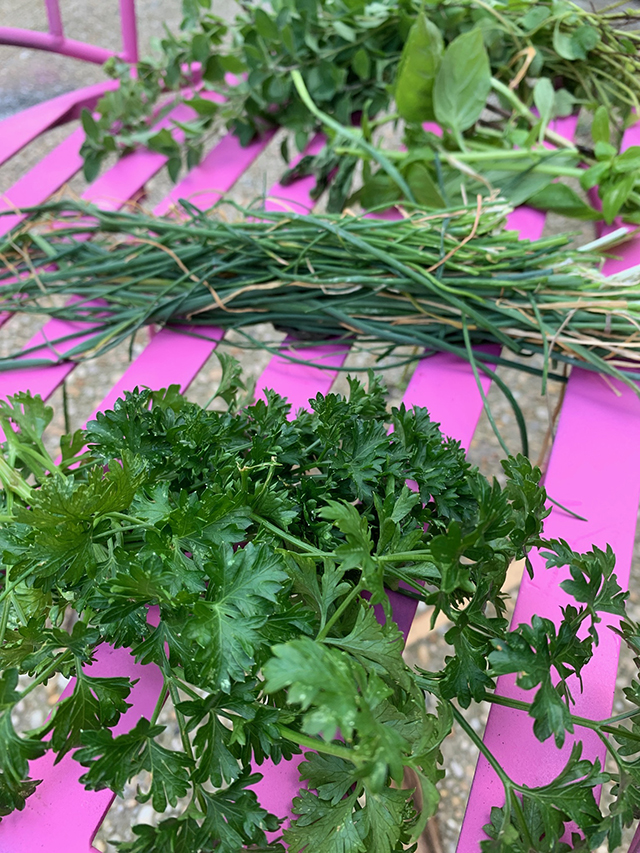
My herbs are also still growing strong. I made another large batch of pesto last week. I have so much parsley and oregano, it feels premature to dry them out for winter use at this point.
Parsley is one of my favorite herbs to cook with. It has a spice and earthy flavor but it’s not overbearing. This makes it great to use in so many meals, soups and salads. It’s also a pretty garnish. Besides parsley’s culinary properties, it’s whimsical florets will attract swallowtail butterflies and bees to your garden. So consider planting this herb for all of its benefits next season.
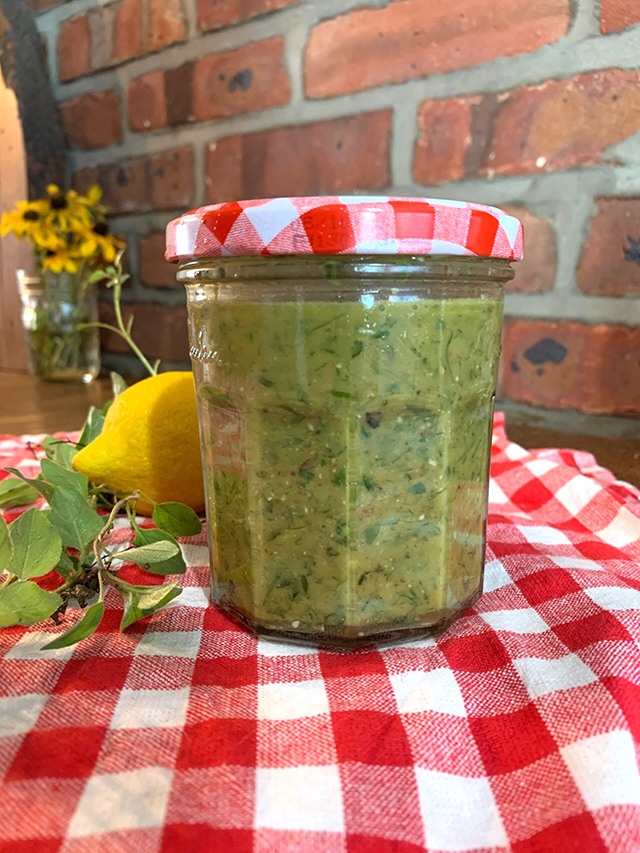
With my abundance, I decided to make a dressing of sorts with parsley, oregano, chives and a bit of basil. How can you go wrong?
Garden Herb Marinade
(makes one cup)
Ingredients:
A handful fresh Italian parsley
A handful fresh oregano
A handful fresh chives
About 7 large basil leaves
1 lemon
½ cup olive oil (Colavita is my preference)
½ cup red vinegar
6 cured black olives, pitted
1 teaspoon parmesan cheese
1 clove garlic
Salt, fresh ground pepper to taste.
Directions: Rinse and remove any dead or yellow leaves from all herbs. Cut stems off parsley. Pick basil leaves off the stem. Chop the chives one inch long. For the oregano, hold the top of the sprig with one hand and run your thumb and index finger down the stem. This is an easy way to remove the small leaves quickly.
Combine all the ingredients into a food processor and pulse for one minute until blended well.
This dressing is perfect for marinating meat and fish. The longer you marinate, the better. I treated myself to a swordfish steak. It was delicious, soaked in herbs. It can also be used on salads or to drizzle on Italian bread. The garden herb dressing will keep in the refrigerator for at least two weeks. Store in a sterilized, tightly closed jar.