Spectacular Composite Life Forms
With all the rain this past week, I’ve been noticing little patches of amber, bright green, and silver blue spreading across tree branches, old fences, cement, and forgotten rocks. At first glance, they don’t look like much, just a bit of moss. But they’re not moss at all. They’re lichens, and the more I learned about them, the more amazed I was.
Lichen isn’t a single plant. It isn’t a plant at all. It’s a remarkably complex partnership between a fungus and algae, sometimes with the help of tiny photosynthetic bacteria (cyanobacteria), and can even host other organisms like yeast. They’re considered a composite life form. The fungus provides a safe home, collecting water and shielding its partner from the elements. In return, the algae use sunlight to make food through photosynthesis, feeding them both. Alone, they might struggle, but together they become something entirely new and strong. Scientists consider lichen one of nature’s most successful examples of symbiosis. They grow from high mountain peaks to sea-level coastlines, on every continent — even frigid Antarctica. They are everywhere on our strange and beautiful planet.
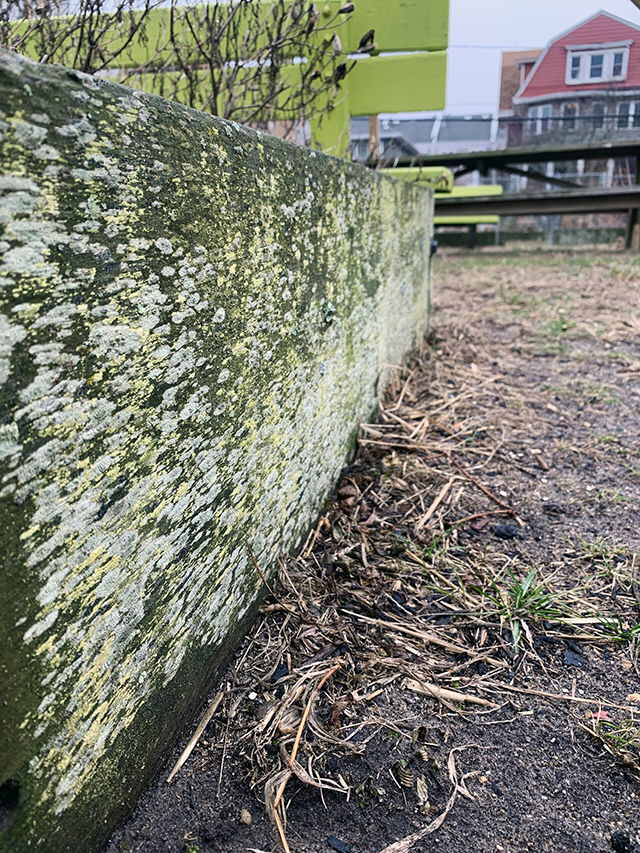
Rain or moisture in the air transforms lichen. Its outer layer becomes translucent, uncovering the bright green algae living inside. Then, as it dries, it hides and you barely notice it is there. This is a picture of foliage I took at the Beach 91st Street Community Garden.
Pay attention to the little things, and you’ll realize lichen is everywhere. It quietly decorates tree bark, paints the cement retaining wall in front of my home, and covers rocks, fences, and branches. I stopped counting the patches I saw on my walk from the beach to the Boulevard.
Get up close, and you’ll discover dramatic little worlds. Their intricate forms remind me of miniature coral reefs growing on land instead of beneath the sea. Or I see tiny gnome worlds, with endless shapes and colors blending together like an organic abstract painting. Some even look like summer snowflakes clinging to the bark of a tree.
Lichens thrive in places where almost nothing else can survive. Some species grow incredibly slowly, just a millimeter or two each year—yet they can live for decades, even centuries. They are survivors. They’re patient, a quality I strive for.
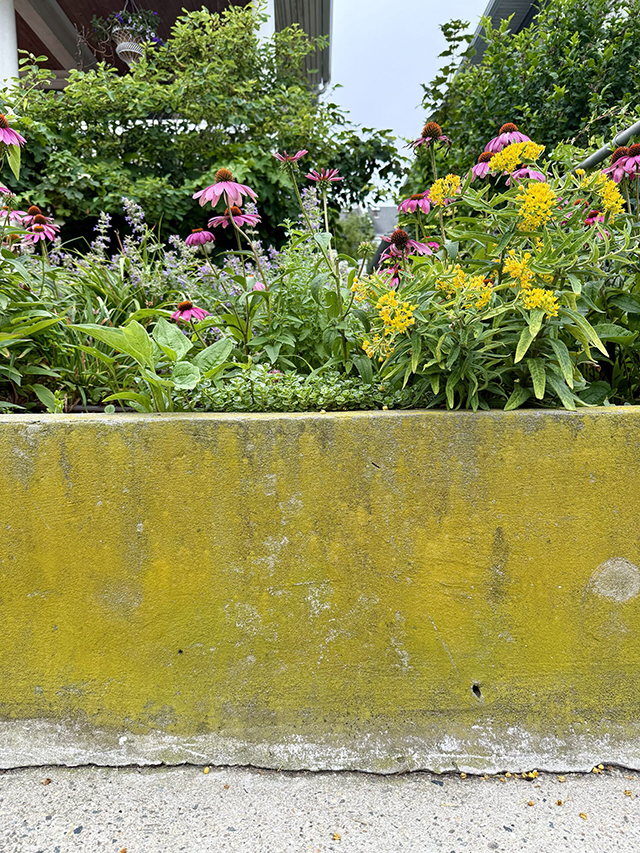
Lichen growing on my garden wall is Acarospora Socialis (bright cobblestone lichen).
The recent rainy weather has made them especially beautiful. Look around on your walks to the grocery store or to the concessions. The moisture wakes them up! Their colors deepen and textures soften. What looked dry, brittle, “God knows what” last week during the heat wave is now a bright, adorning textural showcase of symbiotic life.
There are about 20,000 known species of lichen in an incredible variety of forms and colors. The three most common types are foliose (leaf-like), crustose (crust-like), and fruticose (finger-like or shrubby). We often celebrate the biggest blooms and tallest trees, but lichen asks us to look closer. To notice the beauty in cooperation instead of competition. And to appreciate that communal partnership makes life brighter.
Follow me, discovering the little beauties of the garden on Instagram: @theglorifiedttomato.com