A Wonder of the Garden – Tendrils
Tendrils are silky, curling little strands reaching out from vines, searching for something to hold onto. Like all of us. The moment they touch a tomato cage, a trellis, a branch, or another plant nearby, they quietly begin wrapping themselves around it. Strengthening their plant, reaching for the sun.
Many plants have splendid and mysterious tendrils. Peas, the Cucurbitaceae family (melons, pumpkins, squash), grapes, passion flowers, clematis, cup and saucer, Virginia creeper, and honeysuckle, to name a few.
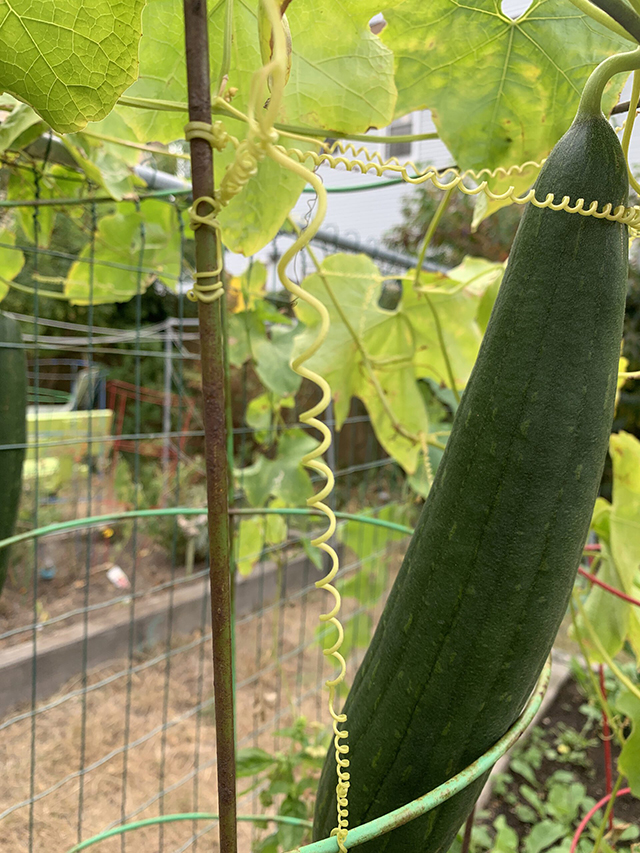
Plants aren’t just growing; they’re sensing, responding, adapting, just like us.
It’s impossible to direct them exactly where you want them to go. I have tried and failed! They simply keep reaching until they find what they need.
I’m certainly not the first person to be fascinated by tendrils. In my internet puttering, I learned Charles Darwin was so captivated by these symbiotic, climbing plants that he devoted his time to them in observation and wrote an entire book reflecting his studies called The Movements and Habits of Climbing Plants. Darwin’s book explores how climbing plants use tendrils and other mechanisms like rootlets, twiners, and root and hook climbers to cling to supports. The book examines how these remarkable adaptations evolved. He also investigated how the environment, like light and gravity, influences the way climbing plants grow and move. And it includes beautiful, simple illustrations drawn by Darwin.
A tendril is defined as a thread-like plant structure, modified from a stem, leaf, or leaf stalk, that wraps around nearby objects to support a climbing plant’s growth.
How do those tiny tendrils know where to reach? Scientists have discovered they’re incredibly sensitive to touch. The moment a tendril brushes against an object, it gets to work. Specialized cells inside the tendril begin shifting water. One layer of cells shrinks while another stiffens, causing the tendril to curl into those adorable spirals. Then, the tendril actually twists in opposite directions with a little bend in the middle, creating what looks like the perfect strand of curly hair. That spring is more than just beautiful. It’s brilliant. It gives the vine strength and flexibility at the same time. Instead of holding the plant rigidly in place, the tendril can stretch and bounce with the wind, absorbing movement without snapping. As the vine grows, the older tendrils tighten their grip while the younger ones stay more flexible, allowing the plant to keep climbing and adjusting to its surroundings. This natural process feels like a reflection of human life. When we’re young, we reach out with curiosity; we are flexible and wild. With age, we settle, hold on, and feel more comfortable with structure.
Every time I look at the cucumber tendrils in my garden, I’m amazed that something so delicate can be so strong and resilient. They remind me that true strength isn’t always loud or obvious. Somewhere along the way, I started thinking of every tendril as “her.” And then I think of the women I know. They have quietly held families, friendships, and communities together while still finding the strength to keep reaching for the sun.
Source: www.indefenseofplants.com/blog/tag/tendrils, https://en.wikipedia.org/wiki/Tendril, www.amazon.com