The City of Volcanic Coffee
On my recent trip to Guatemala, I discovered its rich and unique coffee. It got me thinking, I definitely don’t write about coffee as much as I should, considering how much I love Coffee.
On almost every cobblestone street in Antigua, you can find a wonderful cafe. Many of them have a modern look and feel, which creates an interesting contrast with the antique Baroque city walls. Like many homes and businesses in this timeless city, they often open into interior courtyards filled with vining plants, ferns, and tropical trees. One of my favorite spots even had a coffee tree growing in the cafe courtyard! Definitely don’t write about coffee as much as I should, considering how much I love Coffee.
What makes Guatemalan coffee stand out from so many Central American coffees? The volcanic soil. And it’s one of the premier locations in the whole world for coffee-growing.
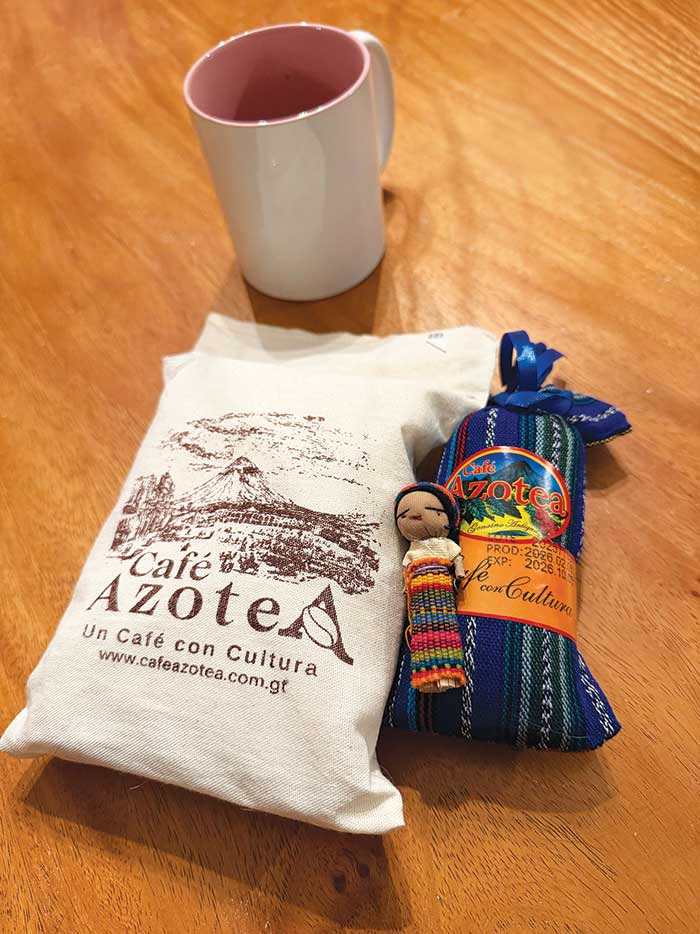
Guatemalan coffee is known for its complex, bright flavor, with hints of chocolate, smoke, or fruit. Much of it is grown high in the mountains, between 4,000 and 6,000 feet above sea level, where cooler temperatures allow the coffee cherries (seeds) to mature slowly. That slower ripening concentrates the flavor and gives the coffee its lively, unique acidity.
The first sip was ground beans bought at a tiendita (small shop), right out of an Uber just after landing. We needed it for the morning. The taste was so different, definitely acidic and spicy was the wow factor. It took a little getting used to. With a bit of Airbnb raw sugar, we acclimated!
The volcanic soil plays a huge role in the flavor. Around Antigua and Acatenango, coffee grows in mineral-rich earth formed by three volcanoes—Fuego (still active), Acatenango, and Agua. One night from a cute rooftop restaurant, we even saw Fuego sending fire and smoke into the sky! The ash from these volcanoes enriches the soil, helping produce high-quality, shade-grown Arabica beans.
I learned Guatemala has eight distinct coffee-growing regions, each with its own flavor. Antigua coffees are full-bodied with chocolate notes and a smoky aroma. Huehuetenango coffees can be more fruity and wine-like (sigh). Atitlán cafe has the spice, thanks to the surrounding volcanoes. The volcano coffees are my favorite by far. My first sip had me thinking, “What am I drinking?!” Followed quickly by a jolt of eye-opening, tourist energy.
What’s nice to know is that most of the coffee is still grown by small farms. The farmers hand-pick the cherries, wash and dry them in the shiny Guatemalan sun. Guatemala is the second-largest exporter of coffee in Central America, and its unique beans can be found all over the world. I’d recommend finding a cup here in NYC and having a lively taste of Antigua culture.
Source: en.wikipedia.org/wiki/Coffee_production_in_Guatemala, blog.suvie.com