by Paula D.
on October 27, 2021 2:51 pm in Holiday
I’ve always enjoyed decorating for the holidays. I believe it’s because of the fond memories I have as a child with my sisters and father, preparing the house for whichever celebration was up next.
We’d help dad string Christmas lights, begging him to go higher and higher on the roof! Notably, strapping baby Jesus down with cables “so nobody would steal him” was a sought-after task.
For Easter, we’d use Scotch tape to adhere the cardboard bunnies to the glass on the front bay window. My father also had the “melted popcorn” decorations. I had to google the name. They are those one-dimensional flat plastic things. The plastic looks swirly and melted. Then came the plastic eggs all around the lawn (I’d never use plastic like that these days!) My sister Maria and I invented the coolest thing with those eggs though. This was back when you could purchase colored toilet paper. Remember the blue and yellow rolls? Why did that go out of fashion? We would take a bunch of yellow paper, wet it and put it inside the eggs. We made yoke! I’m sure you can guess what came next…
In retrospect, I feel my father truly enjoyed decorating with us. It wasn’t a parental obligation thing. He went all out and the house was always the best on our block. He has a talent for it. My sisters and I inherited our creativity from my father and his side of the family. My father could have been a great artist or creator but never was afforded the opportunity. My grandmother Pauline, after her husband died at 30 something, was forced to become a secretary in the “Mad Men” era. So my father and his brother were latch-key kids, also helping with household chores. Creative pursuit was not in the cards.
The interesting part of all of this is that he always and still does find creative outlets. Like decorating for the holidays, refurbishing garage sale finds, gardening or giving me creative suggestions for the house.
Some may feel that decorating is cheesy or a waste of time or money, but not me. It’s imaginative and more importantly, reminds me of so many happy memories decorating to the nines with my father.
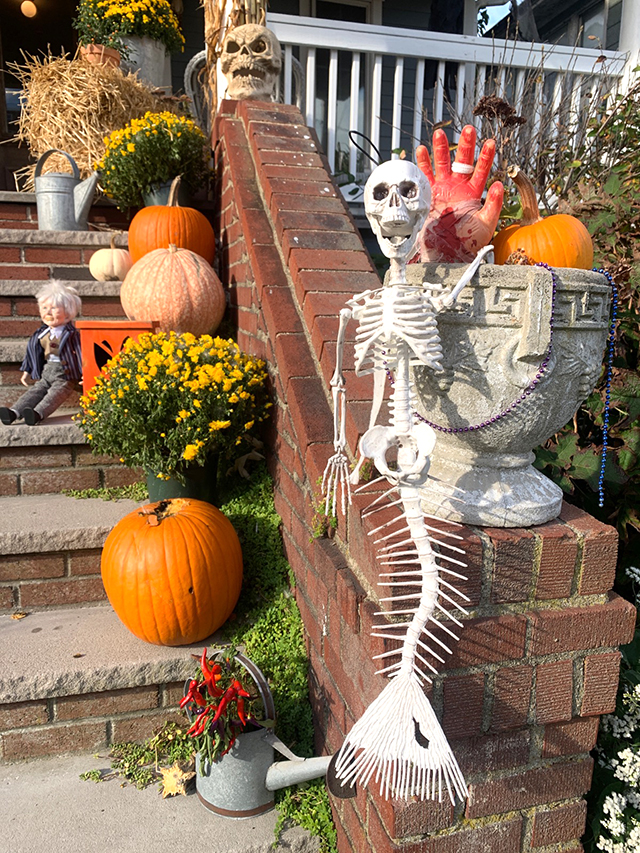
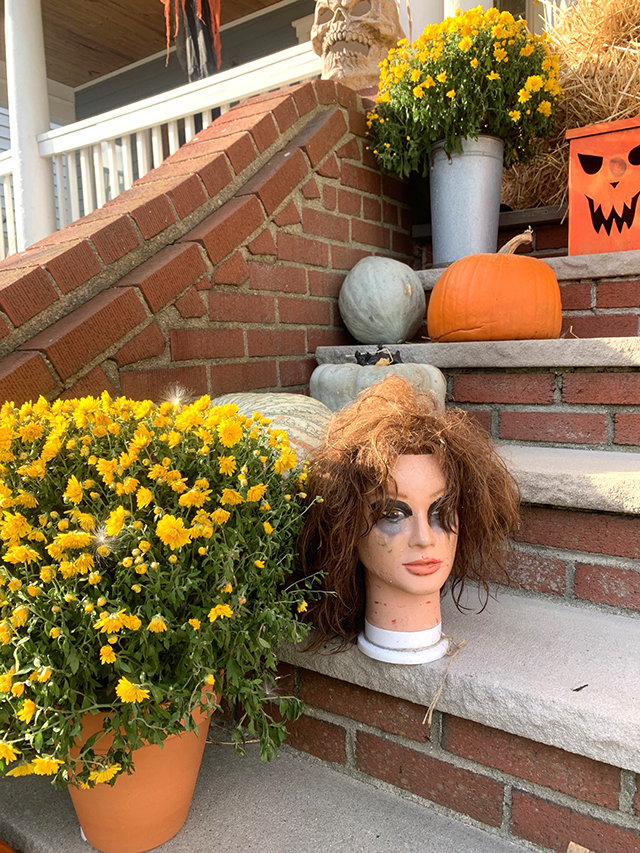
Each holiday I buy a few more items to add to my decorating arsenal. For Halloween, my concept has been skeletons. My father taught me about themes and color – stick to a select palette and one concept. Here are some photos of my display this year! I hope after reading this you are inspired to get creative with your family and decorate. Not to mention it adds fun and joy to our neighborhood streets.
Follow Paula on the day-to-day on Instagram @theglorifiedtomato
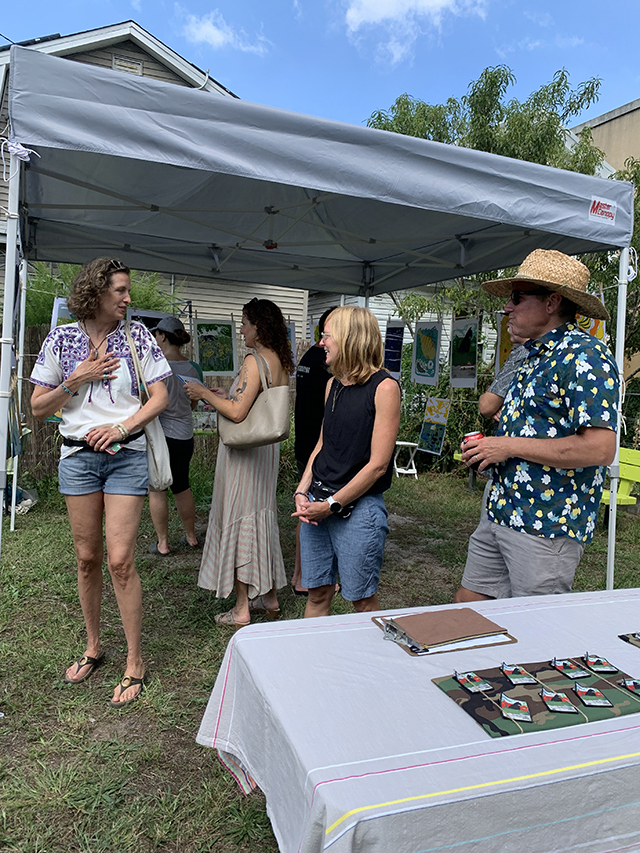
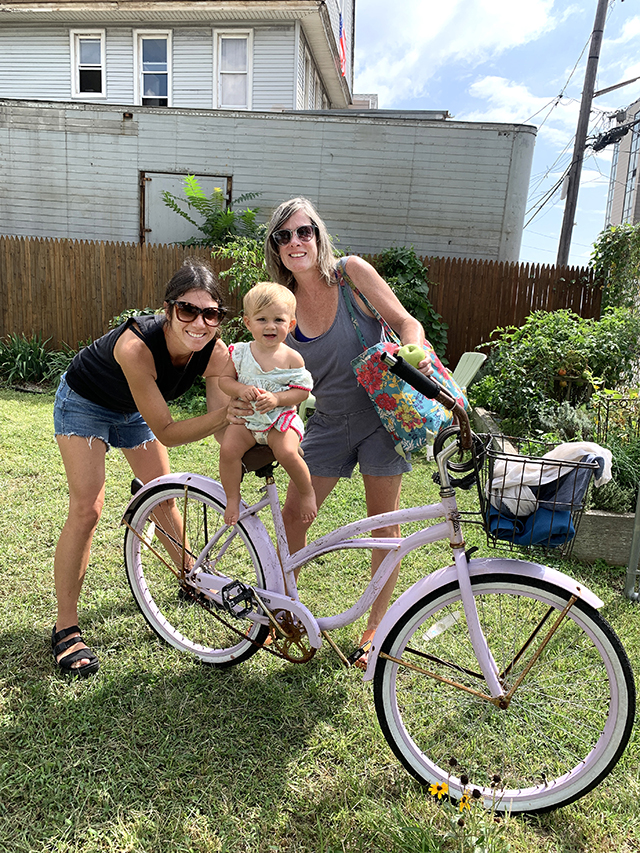
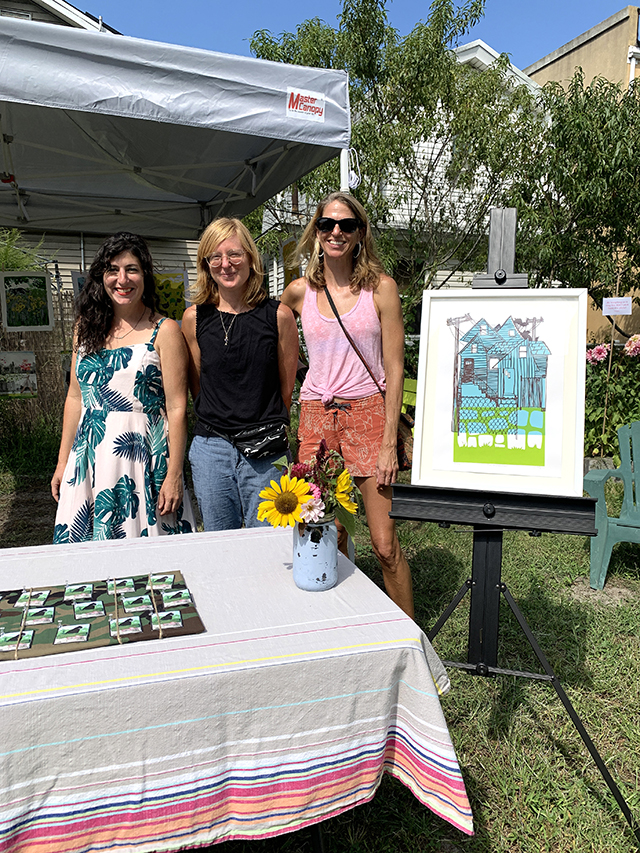
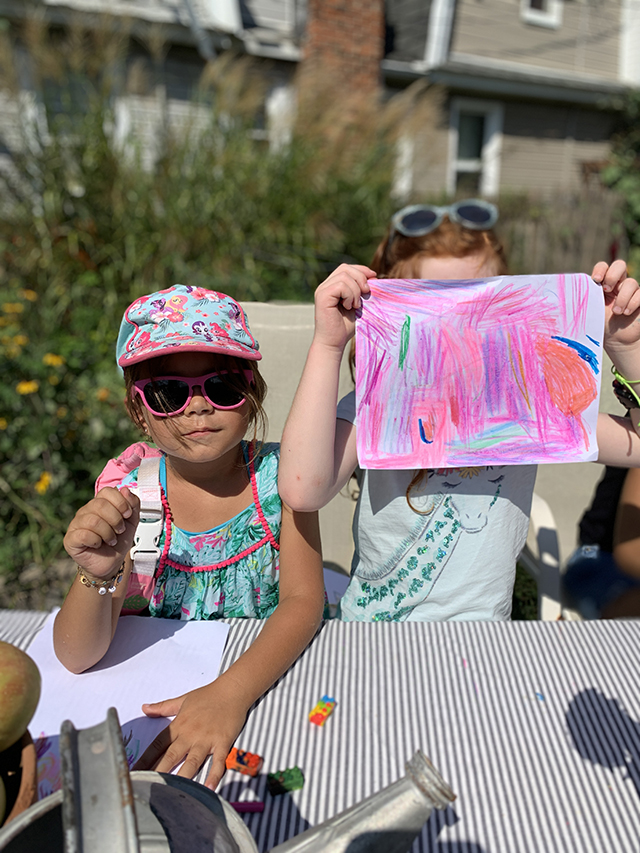
The success of the Beach 91st Street Community Gardens’ art show last Saturday, featuring works by Clare Hilger, was beyond my expectations! So many neighbors and friends came to support us, to view and purchase artwork and enjoy the garden space. We had people in and out all day! I met a few neighbors that I never knew before and some mentioned how they’ve always walked by and wanted to come in. That makes me truly happy because community gardens should have a community impact and I feel we accomplished that.
I wanted to thank a few individuals in particular – Kristi Dickerson and Clare Hilger, who spearheaded the event, the volunteers who set up, cleaned up and helped with other tasks – thank you Jeremy Jones, Elisa Dorn, Miranda Moleski, Fon Tongsomboon, Jill Lauri, Riva Richmond, Christy Illius and Susan Graham… I fear I am forgetting someone!
by Paula D.
on October 5, 2021 9:59 am in Community
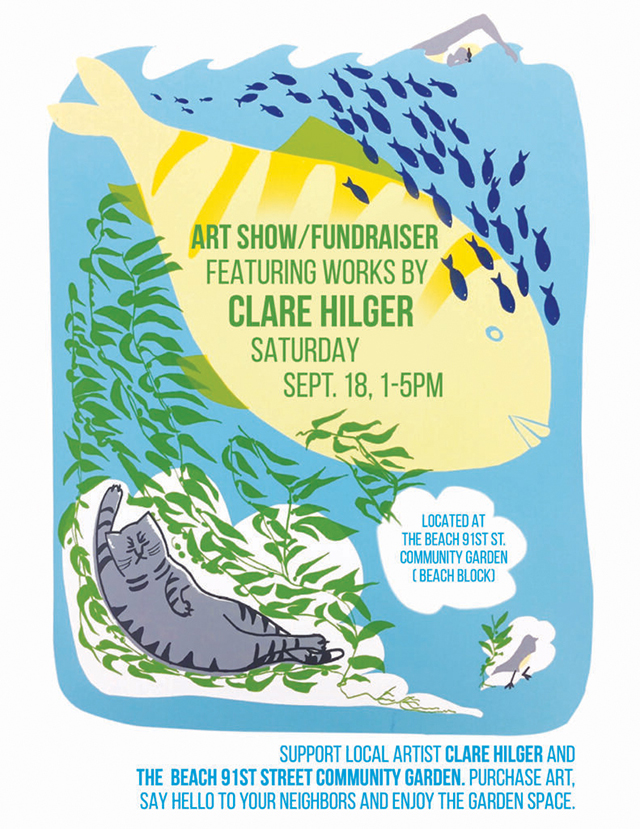
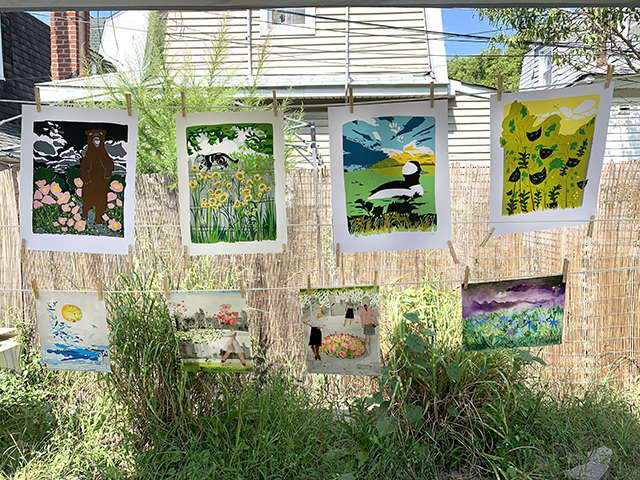
I’m excited to share that the community garden I am a part of is hosting an art show / fundraiser! It will be held this Saturday (tomorrow!) Sept. 18, from 1-5pm at the Beach 91st Street Community Garden (beach block). The artworks of Clare Hilger will be featured. All are welcome to view/purchase art and enjoy the garden space.
Clare many of you may know, as she holds the position of Secretary on the Executive Board of the Rockaway Beach Civic Association. Or you’ve met her at community stewardship events such as garden plantings and beach clean-ups.
Clare is part of the Rockaway Beach Bodysurf Underground, the group that organizes the body surfing competition, which was held last weekend. This event has grown tremendously becoming one of the most anticipated end-of-season happenings in Rockaway. International pro bodysurfers and locals have participated in this awesome sporting event for the past 5 years.
Clare attended Pratt Institute receiving a MS in Art and Design Education. She continued her studies and focus on art, earning a BFA in painting at Kansas City Art Institute. Clare and her husband moved to Rockaway over 16 years ago, and was part of the first wave of surfers/bodysurfers that put Rockaway on the map, as a premier surfing destination.
I’ve been a fan of Clare’s screen prints and collages for some time now. I love her bold use of color, subject matter and organic compositions. Mostly her works are depictions of Rockaway, nature and animals, mixed with elements of urbanism.
When I worked as a graphic designer at The Wave, Mark Healey and I were discussing the summer guide cover, this was 2020. I immediately thought Clare’s prints would be perfectly fitting. After reviewing many notable submissions, myself and Mark both agreed that her work, Oystercatcher, was the winner! I’m happy to have been a part of that artistic decision-making process, and others at The Wave, because it’s so important as a community that we support and promote local artists.
Clare’s artistic statement from her website reads:
My work represents my reactions and my appreciation for the environment in its natural beauty, but not without representation of how urban life intrudes upon nature. Sometimes I find modern civilization coexists with the natural environment in ways that are humorous, harmonious, or sadly harmful. My paintings, collages and prints draw from memory suggesting familiar and surreal scenarios.
To explore Clare Hilger’s artwork visit www.clarehilger.com and follow her on instagram – @swimmonstersandwich. I hope to see you at the garden art show tomorrow!
Follow the garden gram at @Beach91CommunityGarden.